
When Frustration Turns into a Meaningful Project
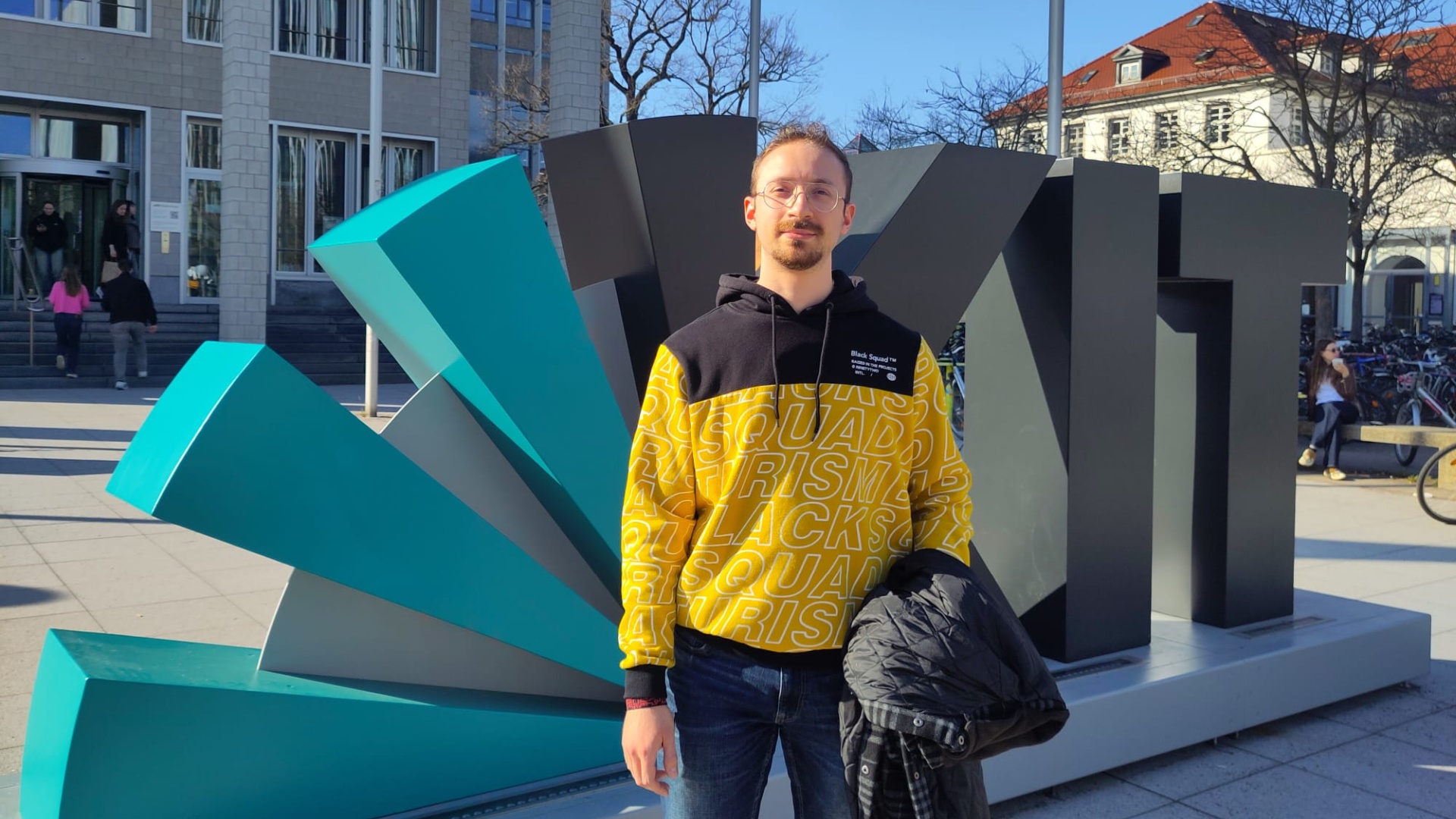
Display broken? “Then I’ll just program a new one!” That’s what Marco Demartino, a computer science student at KIT, thought. The reason: Since November 2025, the usual KVV digital departure displays have been missing at many stops at Karlsruhe. Instead of getting upset, Marco quickly developed his own website – and it works reliably.
To access the necessary data, Marco first submitted a request to KVV for permission to use the electronic schedule information. “After just one afternoon, I had already developed a prototype for the website,” he says. According to Marco, it was initially just an experiment for fun. “But my family started using the website right away, so I kept working on it and eventually posted the link on Reddit.” Then the post went viral: it received 26,000 views within just a few days.
Tailwind and Headwind
By the time SWR3 published an article along with an Instagram post about Marco’s story, the project was no longer an experiment. Alongside a great deal of support, however, there was also criticism. Some commented that the site was unnecessary – after all, KVV already offers comparable services, and the data used is identical anyway. Others criticized that the website was “super easy” to program, claiming that any first‑semester computer science student could do it.
Marco remains relaxed about the comments. “It was easy for me to develop the website – I did it voluntarily, after all.” In his view, his site has a clear advantage over existing services. “My website restricts the search to Karlsruhe. As a result, users see the stops located here directly – unlike on the KVV website or in the app.” His goal was never to build something complex. “I simply wanted to view all departures from a stop at a glance and thereby replace the display boards.”
In addition to criticism, the computer science student has also received a significant amount of constructive feedback. He plans to implement several suggested features right after his exam period.
Programming Outside the Lecture Hall
For Marco, the project also highlights something fundamental about studying computer science: “The program is very theoretical. That’s why it’s important to try out your own small projects in your free time, make mistakes, and learn from them.” When asked what he would recommend to other students, he says the best projects often arise from emotions. “Either from enthusiasm for a hobby you want to support with a program – or from frustration because something bothers you and you want to solve the problem,” he says, adding: “I work best when I focus on something that interests me – not something others claim is important.”
Less Data, More Departure Times
In addition to functionality, another point was important to Marco: data protection. The website collects only minimal information, such as the number and time of visits. “I don’t like tracking myself. That’s why the website doesn’t store IP addresses or anything similar.”
His website intentionally leaves things out: no ads, no tracking, no unnecessary extras. Instead, it displays exactly what matters: the departure times. Incidentally, the website bears a name that sounds more like an inside joke among computer scientists: fart.somethings.dev. The name stands for “Finally A Reliable Timetable,” and that is precisely what the website is intended to be: a reliable, minimalist overview of upcoming departures.
Marina Schreidl, April 1, 2026