How did you like the article? Feel free to use our new rating feature on the right edge of the screen and let us know what you think! This will help us improve our content.
Participation is voluntary and anonymous.

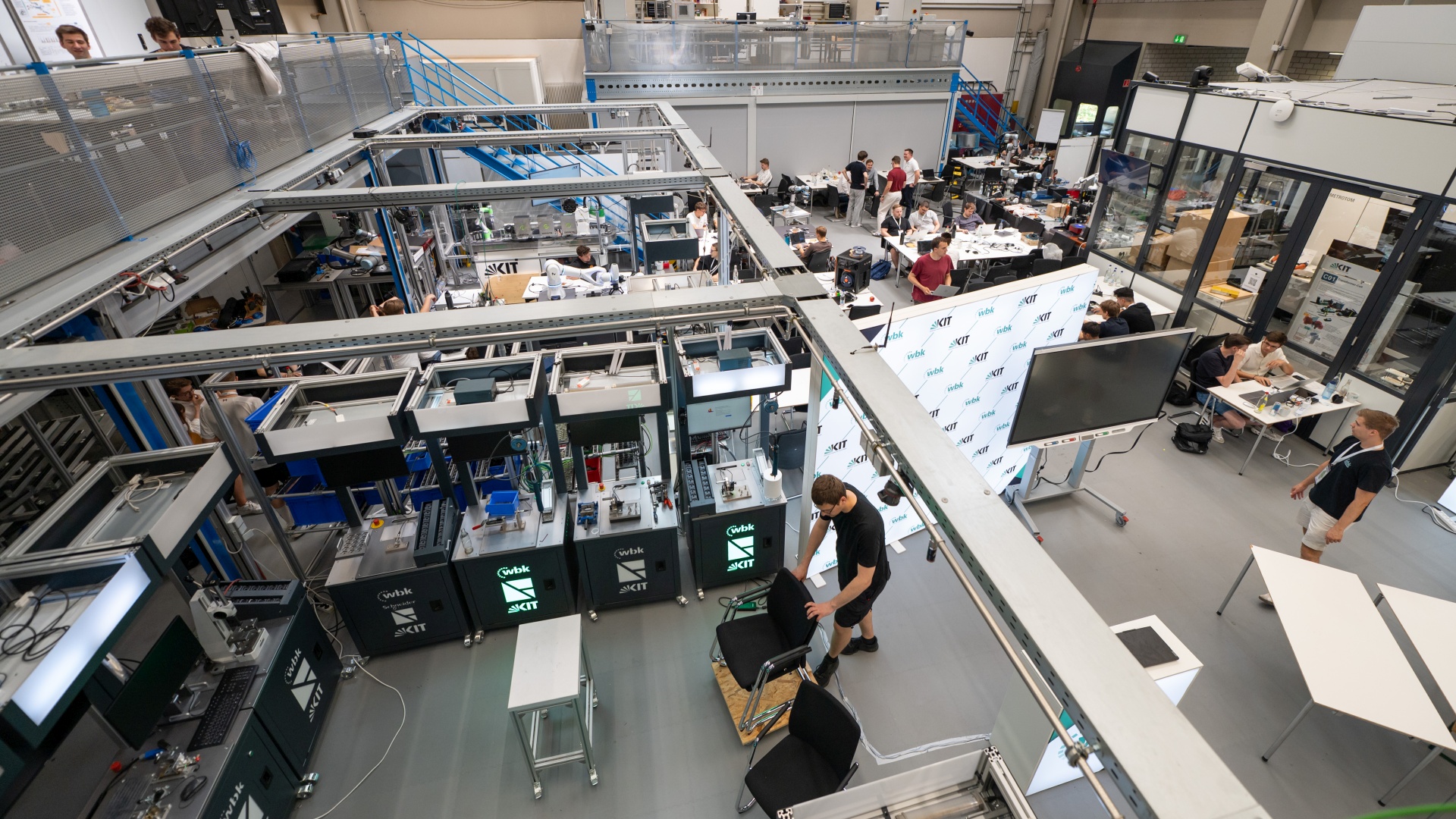
Registration closed at 65 participants: The organizing team of the 6th Hackathon at the wbk Institute of Production Science at KIT closed the registration portal after just one week. Those who secured a spot tackled a challenge from real-world industry practice in teams of three to five students on July 7 and 8, 2026.
How did you like the article? Feel free to use our new rating feature on the right edge of the screen and let us know what you think! This will help us improve our content.
Participation is voluntary and anonymous.
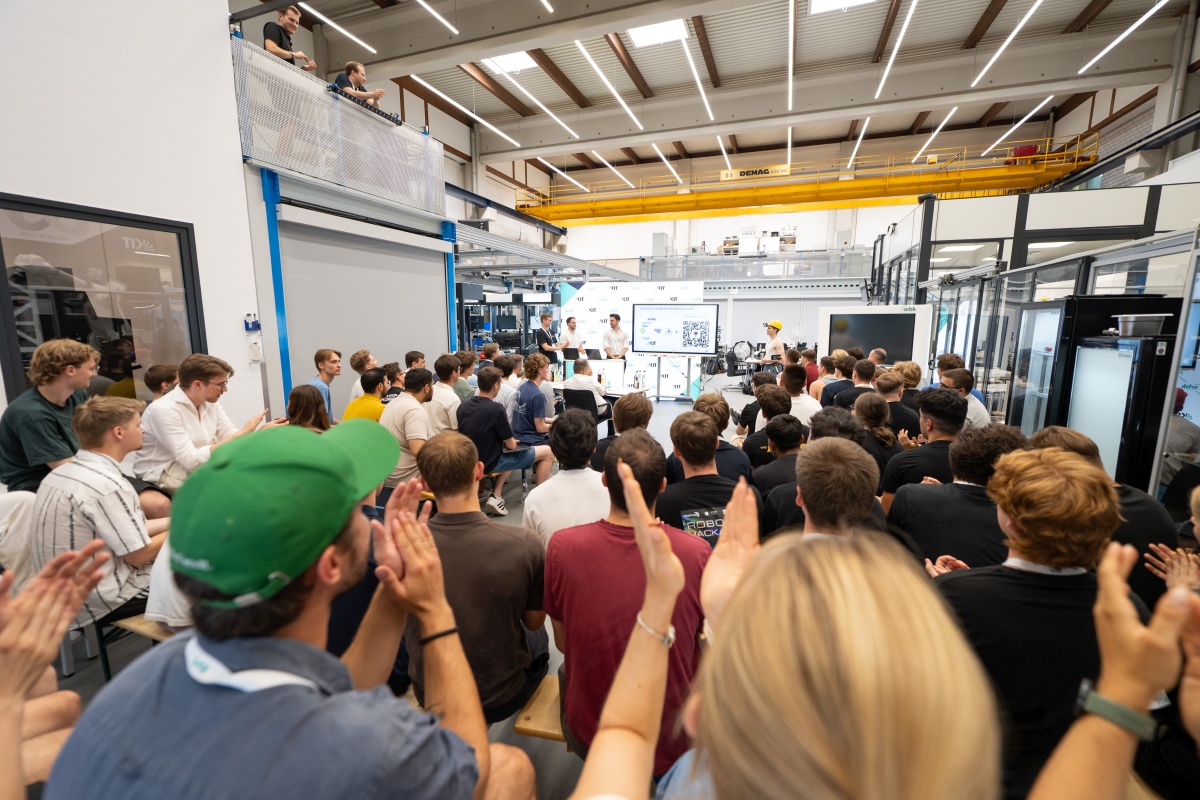
The deadline came after 32 hours with a pitch before the jury. The all-nighter was especially worthwhile for the three winning teams: In addition to good food, fun, and access to technology they would not normally have, they shared a total of 3,000 euros in prize money. Participants included bachelor’s and master’s students from KIT’s technical degree programs. Most appreciate the hands-on experience the hackathon offers, as do the two mathematics students Fabio Lehmann and Vincent Fleig. Their main motivation for participating was to complete a real project from start to finish: “We usually come from theory. Here, we are given a problem and see how we can solve it.”
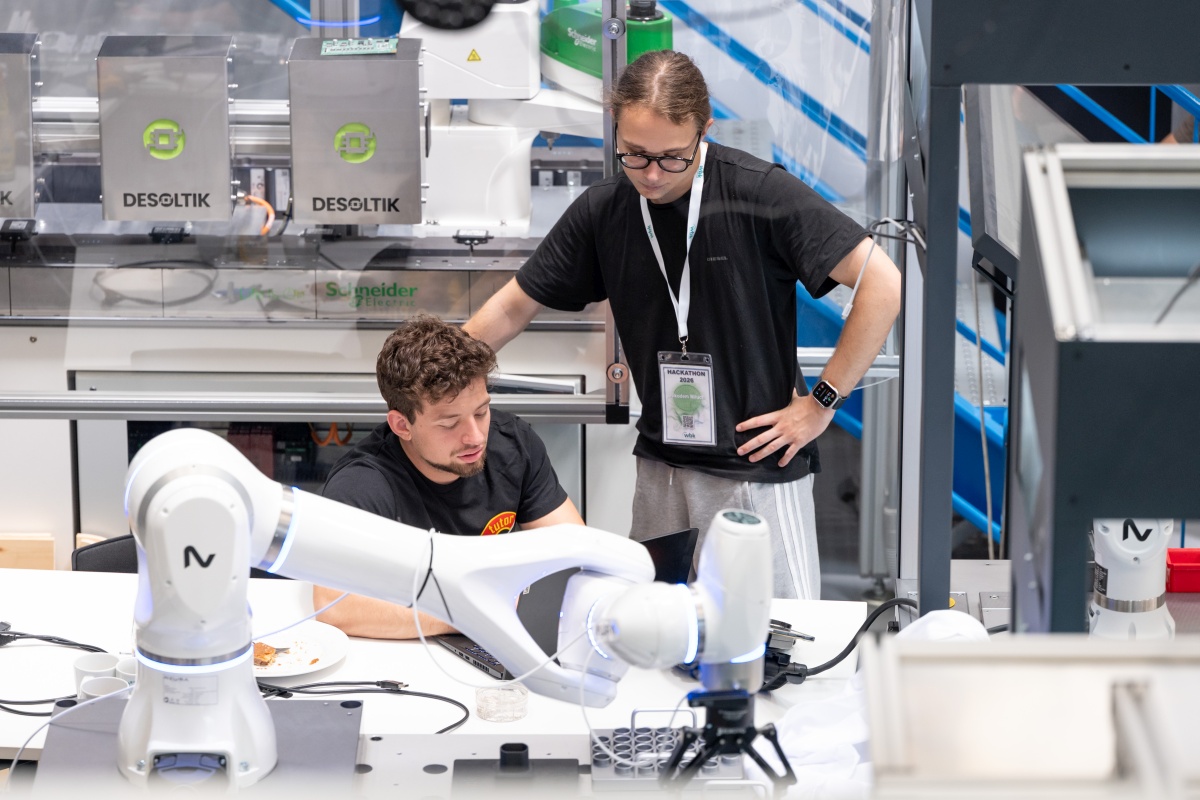
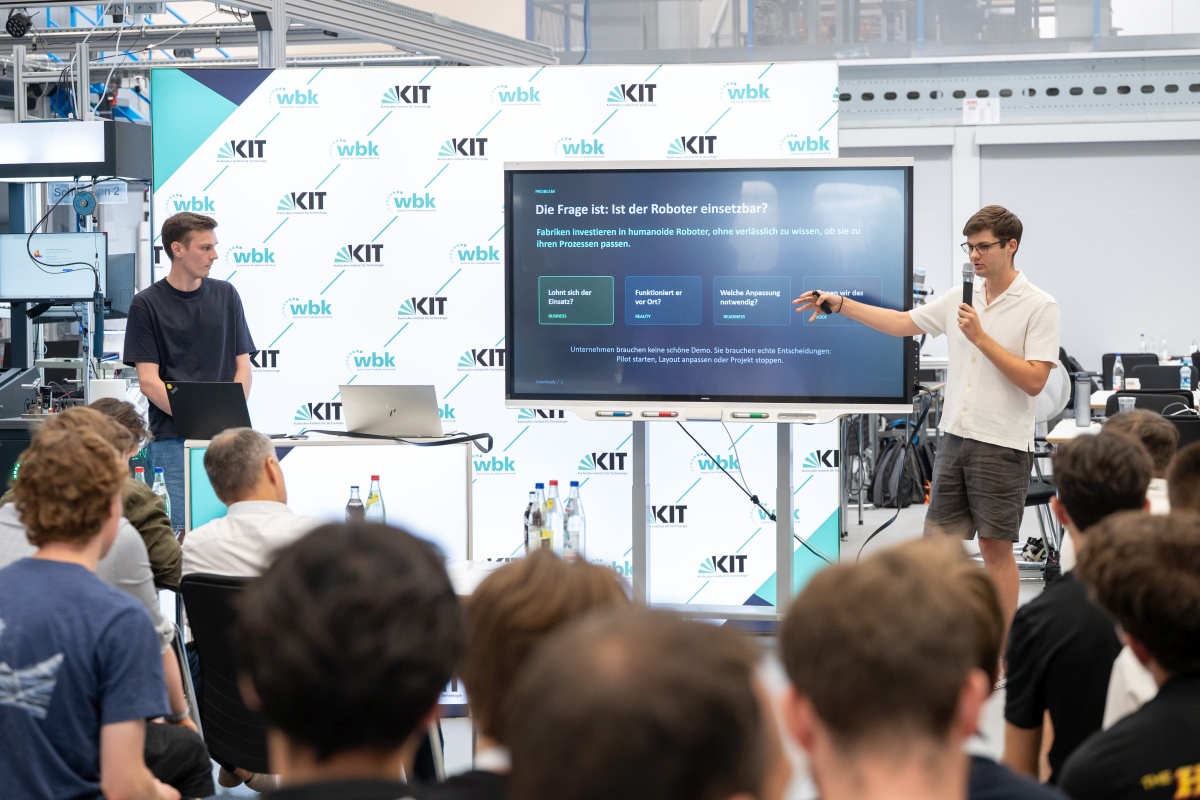
In previous years, industry partners often brought ready-made hardware, with the approach: “See what you can do with this.” This time, there were real, unresolved problems from day-to-day business operations. These included, for example, the use of humanoid robots in production or the control of a robotic arm using AI. Representatives from both companies were on site late into the night to answer questions, provide mentoring – and to observe the teams’ approaches firsthand. For them, the hackathon is also a great opportunity to present themselves as employers.
The founders of the spin-off Desoltic provided technical support and inspiration. Having stood on the winners’ podium themselves two years ago, Max Möbius, Rouven Jachemich, and Alexander Meiners now contributed concrete business perspectives to the teams’ work. They helped the teams critically assess the market viability of their solutions: “How can I not only create something impressive from a technical perspective, but also potentially generate revenue with the idea?” The KIT-Gründerschmiede (Founders Forge) was also involved again. It prepared the teams for their presentation to the jury through workshops and pitch training sessions.
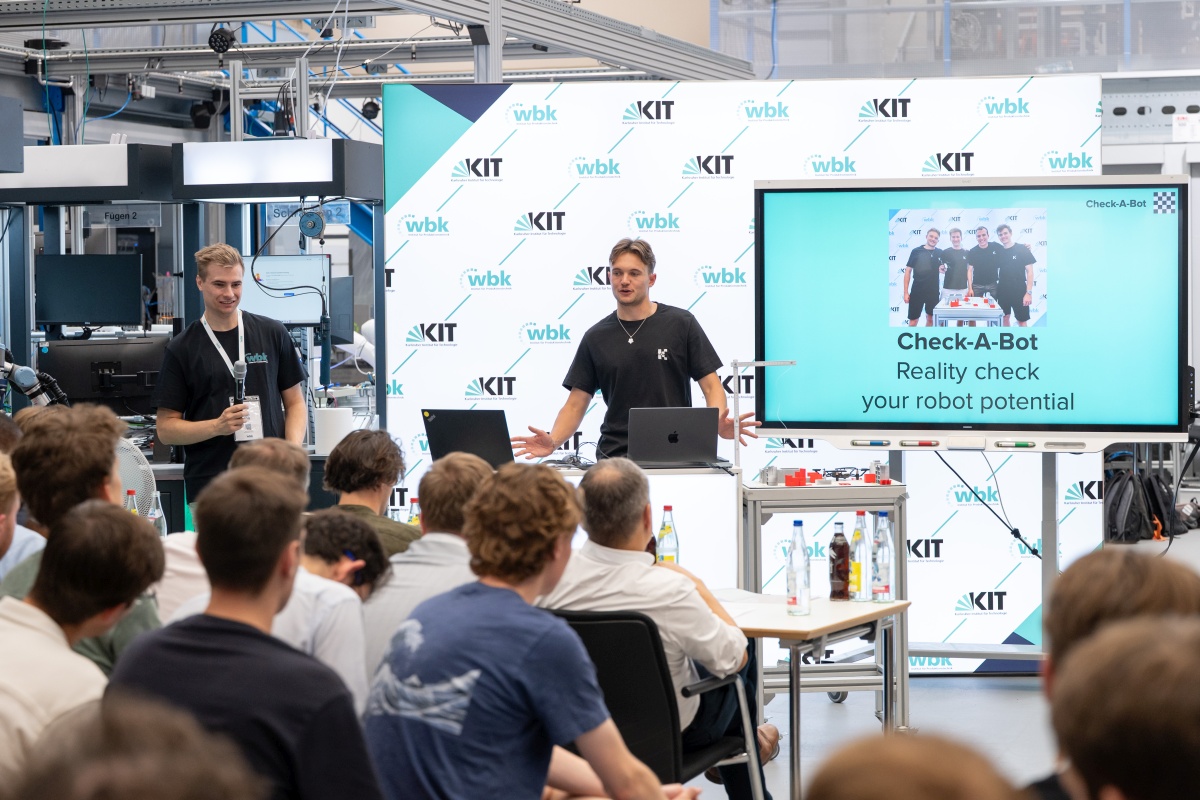
In the end, the Check-A-Bot team – comprising Till Laube, Tobias Wist, Vincent Fiedler, and Jonas Iser – impressed the jury. Some members of the group were already among last year’s winners. “For us, the added value of the hackathon lies primarily in the fact that you are forced to think in economic terms,” they report. This year’s Robotics Challenge was a good fit, since Till and Vincent are also founders of the student group KAIRA (Karlsruhe Intelligent Robotics Association). Second place went to Larp-athon, and third place to Remanufacturing Vision. The jury named the smallest team at the event, the duo RoboReady, as the audience favorite.
The hackathon was initiated by former wbk employee Constantin Hofmann, who returned this year as a juror: “On the one hand, we wanted to bring research topics into practice and give students the opportunity to gain practical experience. And, of course, to attract young talent to the institute.” His conclusion from the jury’s perspective: “Hats off! A great deal was achieved in those two days.”
Simone Heinrich, July 24, 2026