How did you like the article? Feel free to use our new rating feature on the right edge of the screen and let us know what you think! This will help us improve our content.
Participation is voluntary and anonymous.

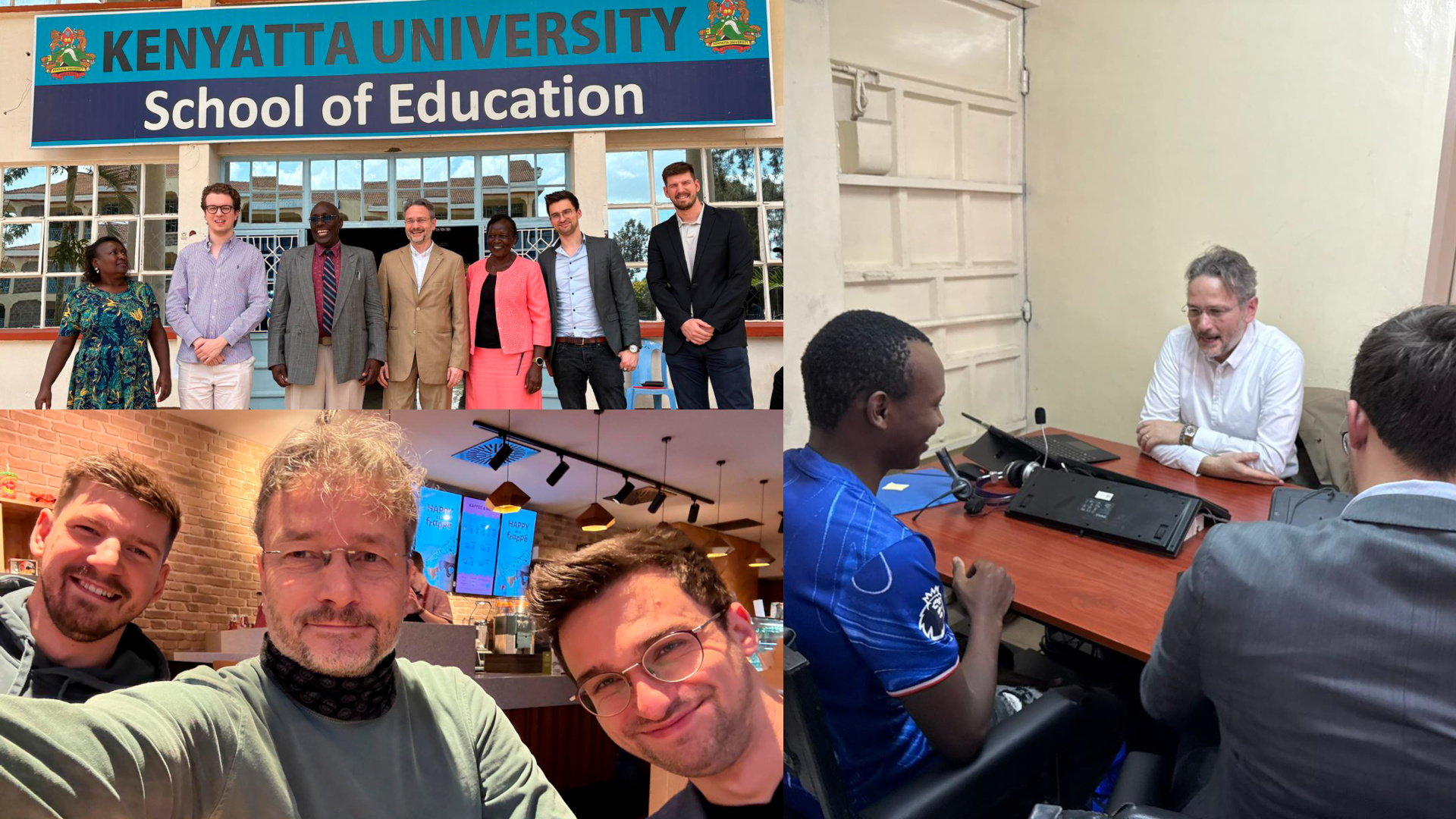
Giving a lecture is nothing out of the ordinary for Nikola Lukezic and Moritz Zink – if it weren’t for the fact that their students are located thousands of kilometers away in Kenya. The PhD students later traveled there with their professor, Eric Sax, to conduct oral examinations and visit several educational institutions. In clicKIT, they report on their experiences in an unusual project.
How did you like the article? Feel free to use our new rating feature on the right edge of the screen and let us know what you think! This will help us improve our content.
Participation is voluntary and anonymous.
How did Nikola and Moritz come to be involved in the project in Kenya? Through Eric Sax’s personal contact with Konstantin Kölmel, the founder of the Liberating Education Organization (LEO). LEO’s aim is to create a global network of free university education centers to give local people, particularly those from underprivileged backgrounds, the opportunity to access high-quality education – through remote lectures, live sessions, and local educational support.
“Professor Sax approached us directly to ask if we’d be interested in getting involved on a voluntary basis,” says Nikola. “So, we created and delivered a virtual lecture on ‘Information Technology & Machine Learning’ for interested students from five learning centers in Kenya,” he explains. “On-site, students were able to attend the lecture in specially set-up computer pool rooms and ask questions.” In total, they offered ten sessions, each attended by around 30 participants.
“At KIT, the bachelor’s lecture in ‘Information Technology’ takes place in the fourth semester. We adapted it accordingly and included practical topics that take into account the specific needs of the region in Kenya,” adds Eric Sax. “Here at the Institute of Information Processing Technology, we have been accustomed to the format of remote lectures since COVID.”
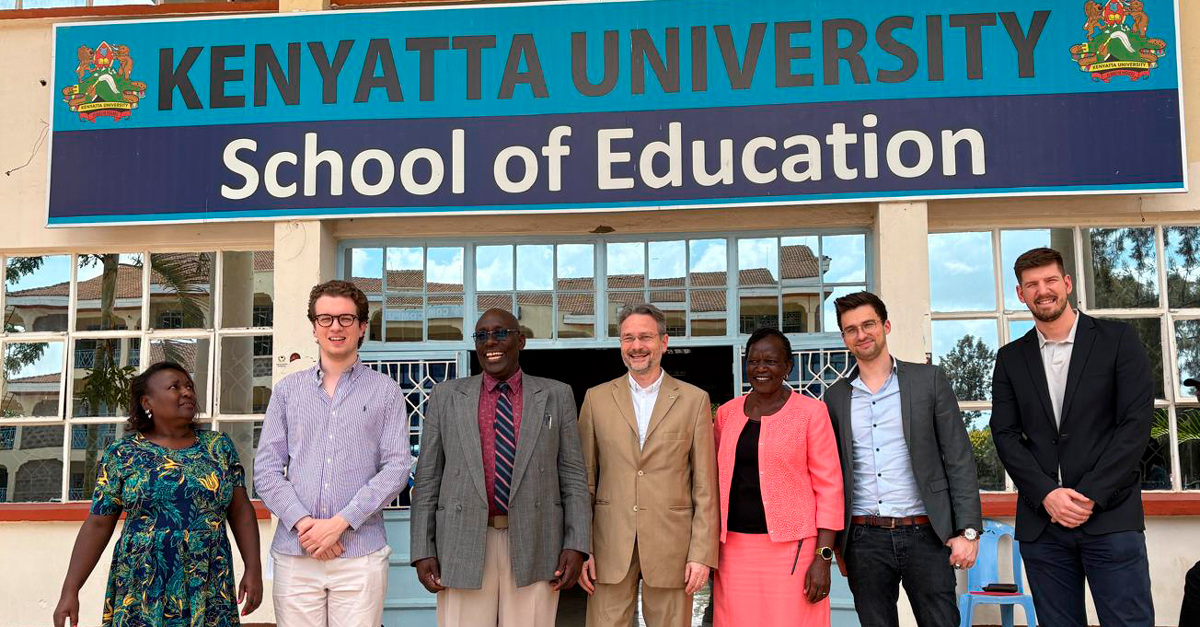
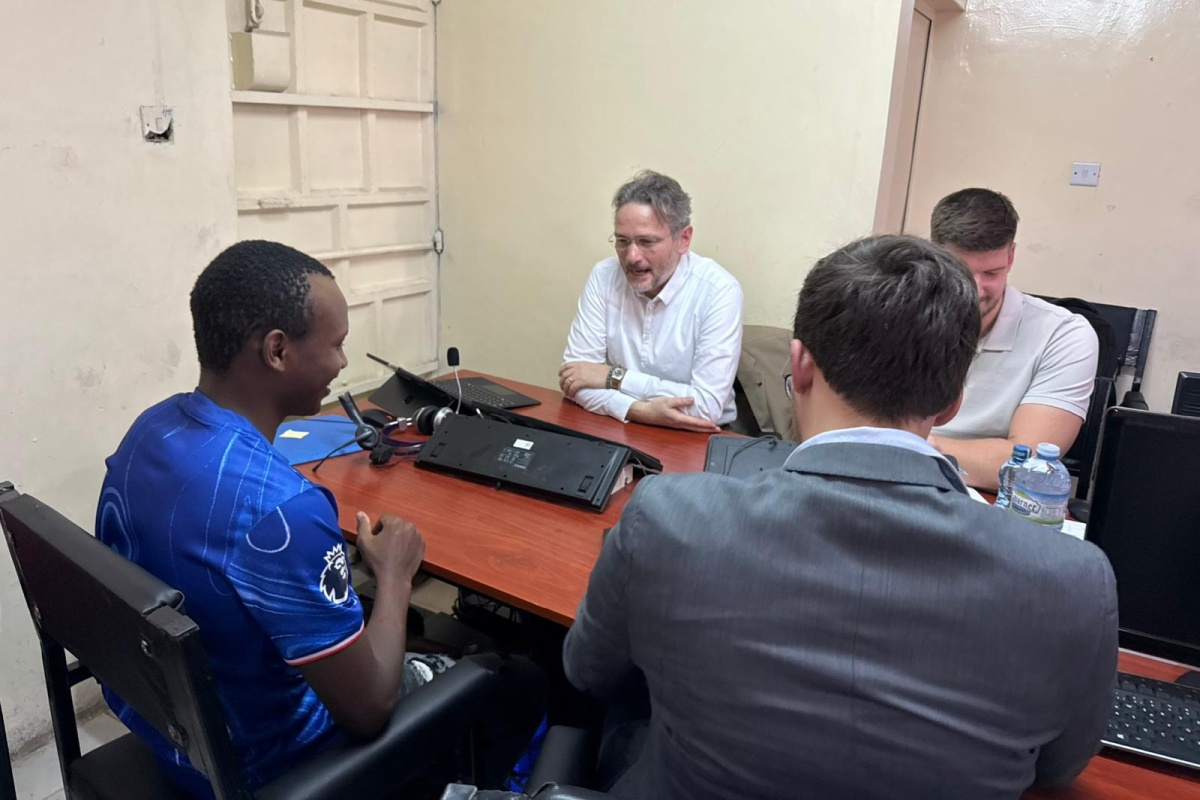
Following the lecture, the two PhD students and their professor traveled to Kenya to conduct the oral exams in the pool rooms in Nairobi and issue certificates of attendance. “The people gave us a very warm welcome and are very hospitable, communicative, and open,” says Moritz, describing his impressions. “On-site, you see huge social differences; modern high-rises and simple residential areas form a stark contrast.”
In total, the KIT delegation visited five universities and educational institutions in Kenya to strengthen existing relationships, reduce barriers, and establish new academic partnerships. “We discussed lifelong learning, digital teaching, and new forms of collaboration,” say Nikola and Moritz. “The exchange on these topics was highly motivating.”
“The culture of questioning among Kenyan students is different from what we are used to. It is difficult for participants to ask questions; their inhibitions when interacting with a professor from Europe are too great. We still have a lot to learn in this regard,” notes Sax. He explains that the main aim of the project is to provide on-site training for students in order to give people in Kenya better future prospects. The course is designed to teach the fundamentals of information technology, artificial intelligence, machine learning, and software development, and to offer students a practical introduction to future-oriented topics so that they can build sustainable livelihoods locally.
After the exams were completed, Nikola and Moritz realized that they need to adapt the course, which they plan to offer again, even better to the participants’ educational level. Furthermore, greater emphasis is to be placed on personal exchange to lower the inhibition threshold among the students in Kenya and to engage more effectively in dialogue with them.
What would they like to pass on to interested students at KIT? “Getting involved is definitely worthwhile, because cultural exchange not only broadens your own horizons but also sharpens your understanding of other perspectives,” emphasizes Nikola, adding: “You develop openness, intercultural skills, and new ways of thinking that are of great value in your future professional life.”
Sabine Fodi, July 16, 2026