From KIT to MIT: “Don't wait for someone to invite you”
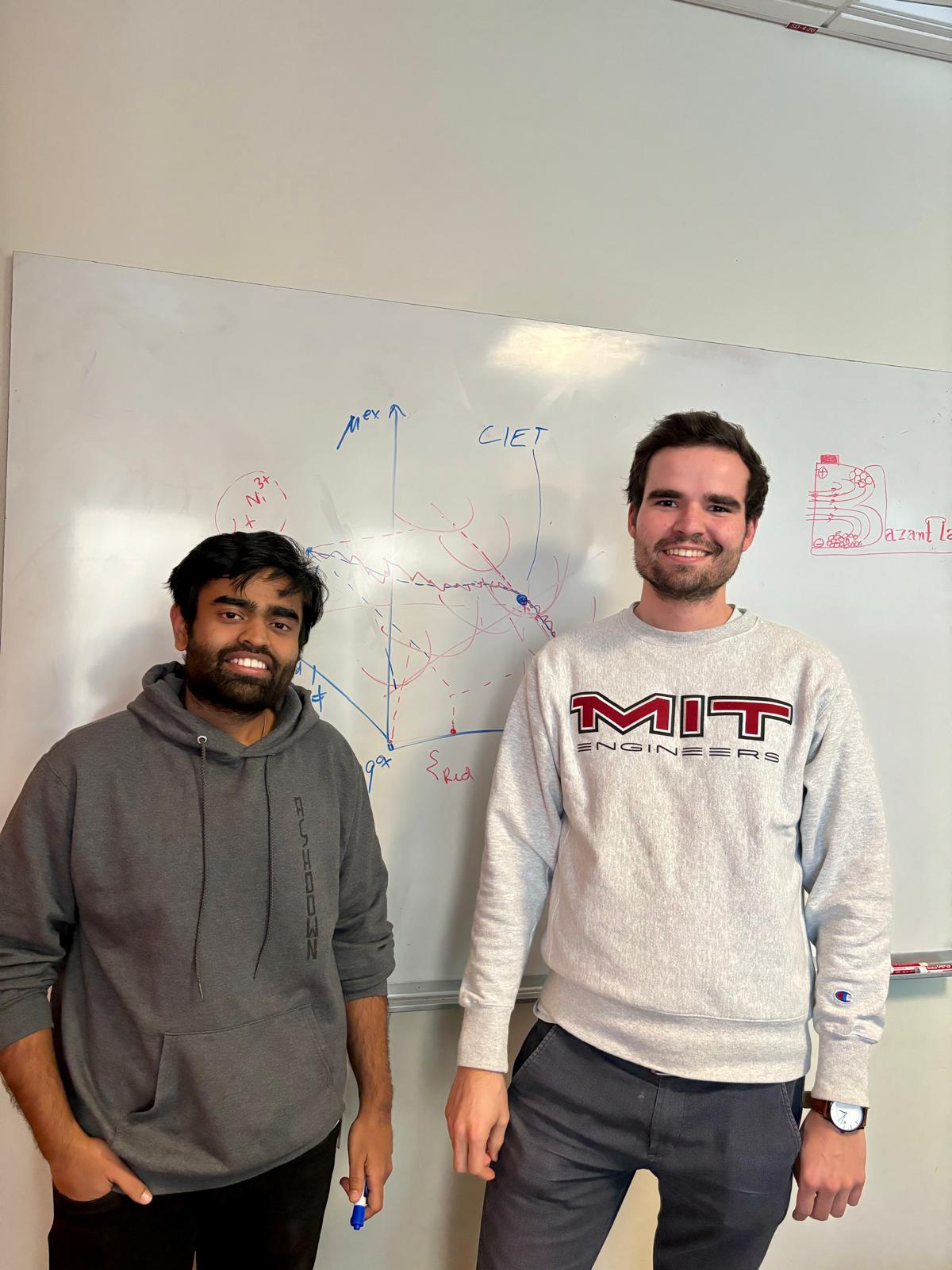
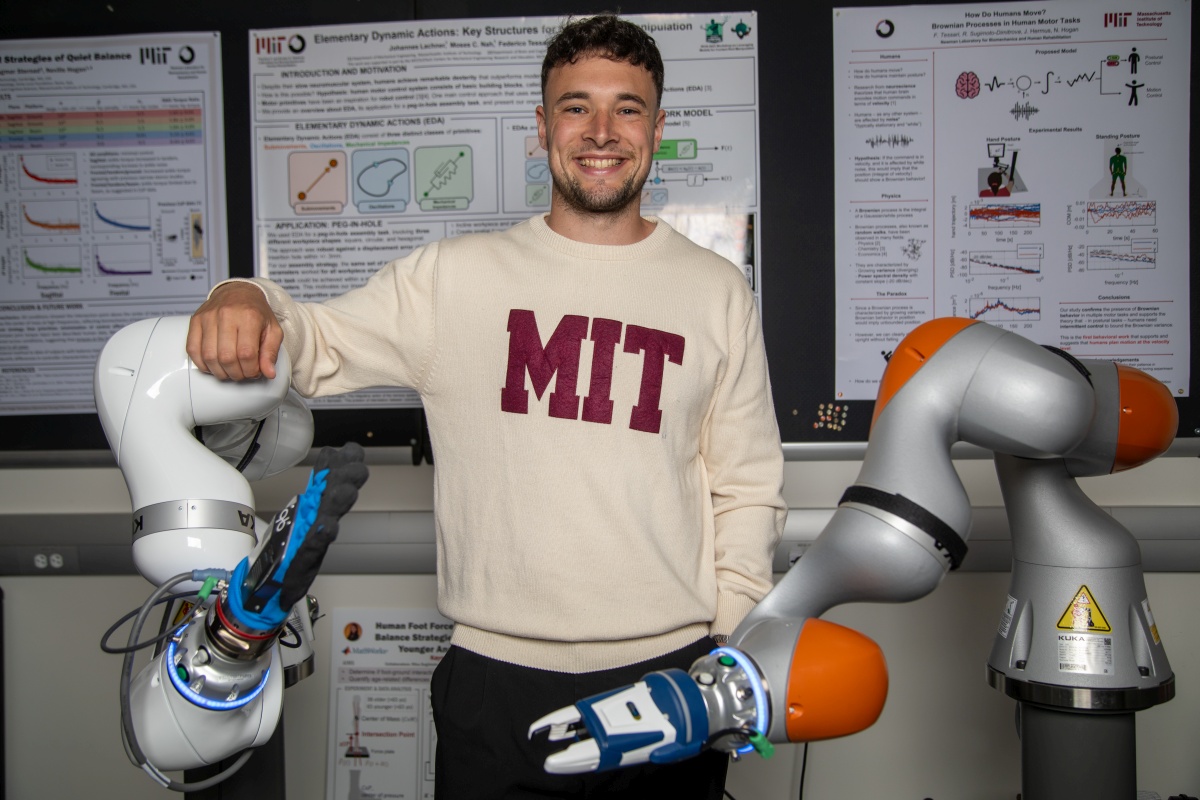
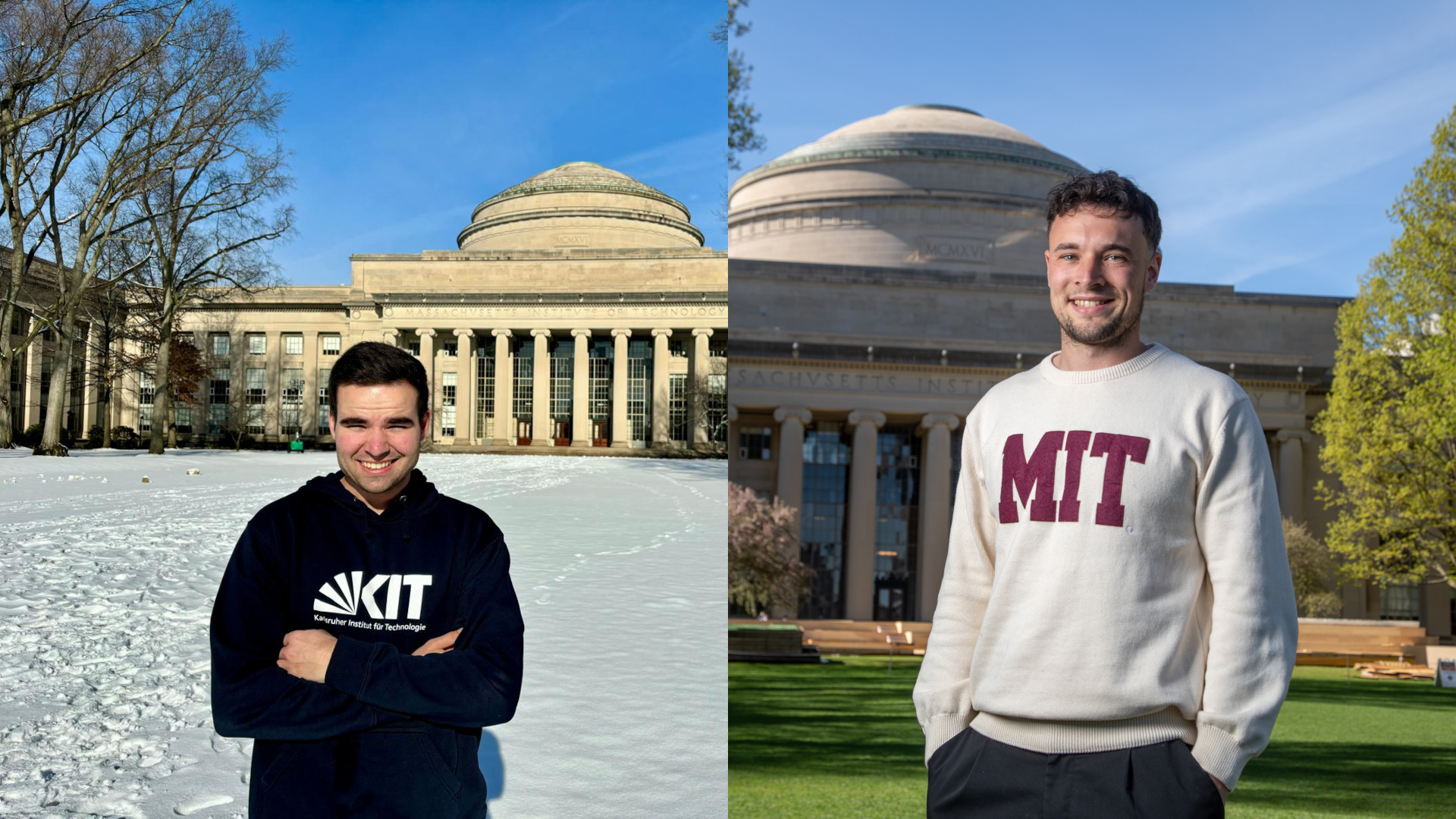
What do robotics, artificial intelligence, and battery research have in common? For Noah Geiger and Konrad Dittrich, the answer is curiosity, initiative, and the courage to pursue international opportunities. Both studied at KIT, both sought to think outside the box, and both ended up at the Massachusetts Institute of Technology (MIT). This was not by coincidence, but through intentional decisions.
While Noah studied for a master's degree in mechatronics and information technology with a focus on robotics and AI at KIT, Konrad immersed himself in electrical engineering and information technology with a focus on energy storage systems and electromobility. Different disciplines, but a common motivation: they wanted to understand how technology can solve real-world problems.
Noah analyzed international robotics labs, contacted researchers at MIT directly, and finally received an invitation to conduct research there. Konrad succeeded through a well-established scientific network between KIT and MIT. Through Professor Ulrike Krewer at KIT and her long-standing collaboration with MIT Professor Martin Bazant, he was given the opportunity to complete his master's thesis in Boston.
Both were able to fully integrate their stays into their master's studies at KIT and directly incorporate them into their theses. Supervision took place on both sides of the Atlantic and is an example of successful international cooperation.
Research Between Data, Physics, and Reality
In terms of content, both worked at similar boundaries: Noah worked on contact-rich medical robotics and combined physical models with AI methods. Konrad researched electrochemical processes in batteries by combining experimental measurement methods with physical modeling.
What connects their work is the aspiration to use AI not as a black box, but as a tool that complements our physical understanding. “You quickly realize that cutting-edge international research emerges where theory, experimentation, and courage come together,” Konrad describes.
Commitment Outside the Lab
Both experienced KIT as an excellently structured and theoretically strong university. At MIT, on the other hand, they were particularly impressed by the close supervision, flat hierarchies, and enormous international exchange. Noah describes it this way: “You are constantly working with people who think on a global scale, and that rubs off on you.” Konrad adds: “At MIT, the question is not whether an idea is too big, but how to implement it.”
In addition to their work in the lab, Noah and Konrad were also involved outside the academic world. They do not view technological innovation in isolation from social responsibility. Both were active on the board of the Visiting Student Association (VISTA), and Noah initiated a Politics Innovation Lab for political hackathons at Studopolis.
International Research Requires Planning
Today, Noah Geiger works in the Junior Managers Program at Bosch in the IT track with a focus on AI and digital innovations. Konrad Dittrich is pursuing his doctorate at RWTH Aachen University in the field of AI-supported battery production. Their paths have diverged, but their attitude remains the same: international, curious, responsible.
International research is not a privilege for the few. It requires planning, but above all it begins with an honest question: What drives me? A lead time of about one year is usually sufficient for organizational preparation, and financing should be addressed at least six months in advance. Technical preparatory work, such as a seminar or student assistant position, is not a prerequisite, but it can increase your chances and should be addressed one and a half to two years in advance. Rejections and lack of responses are part of the process; the key is not to let them discourage you.
The most important step is to have the courage to pursue this question across national borders: “Don't wait for someone to invite you. Go out there yourself,” is the conclusion of the two.
Sabine Fodi, February 12, 2026