How did you like the article? Feel free to use our new rating feature on the right edge of the screen and let us know what you think! This will help us improve our content.
Participation is voluntary and anonymous.

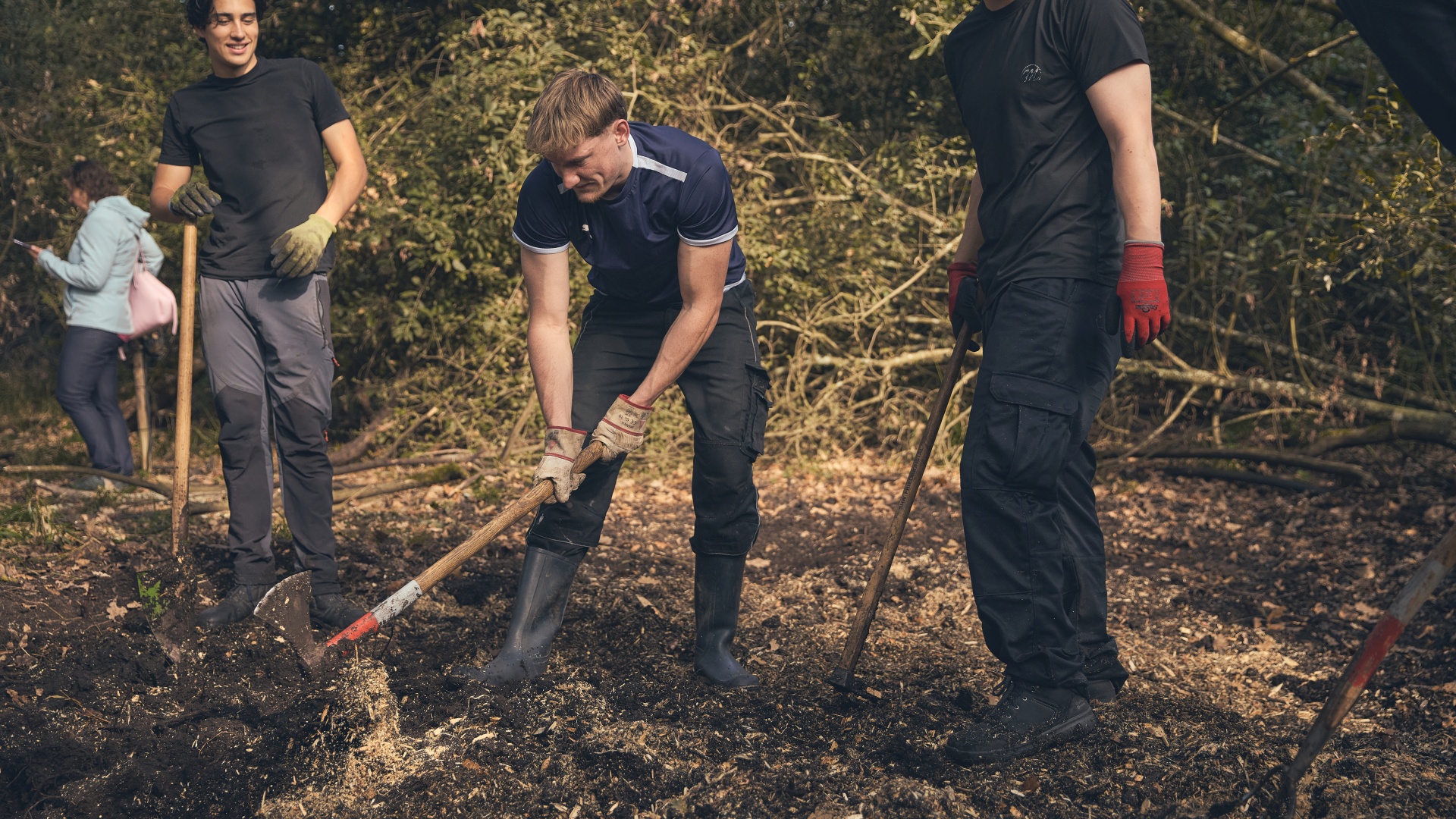
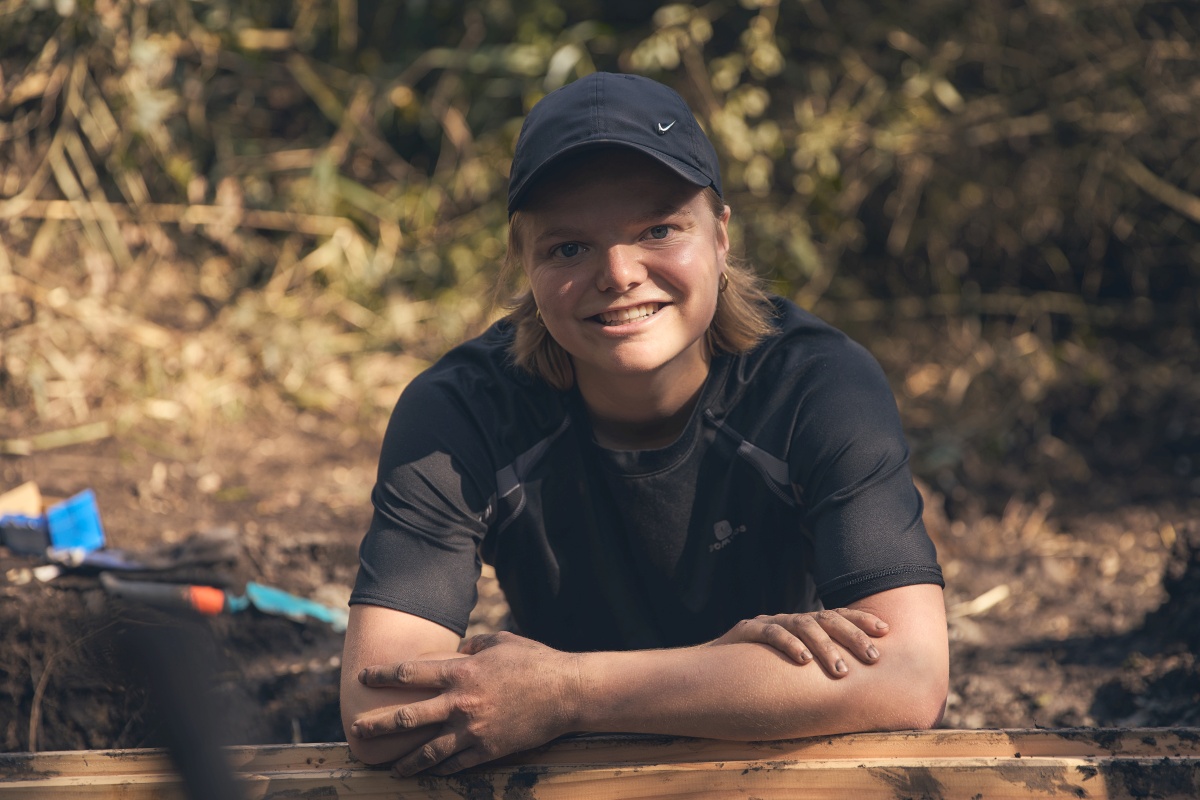
For 17 students of geography and geoecology, this year’s field mapping course was exceptionally hands-on. For five days, they worked with shovels, wheelbarrows, and hoes in the Rastatter Bruch nature reserve, constructing ditch barriers to support the rewetting of a fen. In doing so, they made an active contribution to species conservation and natural climate solutions.
The pilot project is a collaboration within the Interreg Project “Wetlands” in cooperation with the Karlsruhe Regional Council and KIT’s Institute of Geography und Geoecology. It is based on a multi-year study led by Dr. Christian Damm, a researcher in the River and Floodplain Ecology group at the Institute of Geography und Geoecology: “To make peatlands suitable for agricultural use, they were drained through a network of ditches. To this day, water continues to flow away through them year after year. Closing these ditches is our most effective way of retaining water in the peatlands.”
How did you like the article? Feel free to use our new rating feature on the right edge of the screen and let us know what you think! This will help us improve our content.
Participation is voluntary and anonymous.
Slowing the degradation of peat soils is of great importance for climate protection. In drained peatlands, oxygen penetrates the naturally water-saturated peat layers. As a result, bacterial decomposition releases the carbon stored in the peat into the atmosphere in the form of carbon dioxide.
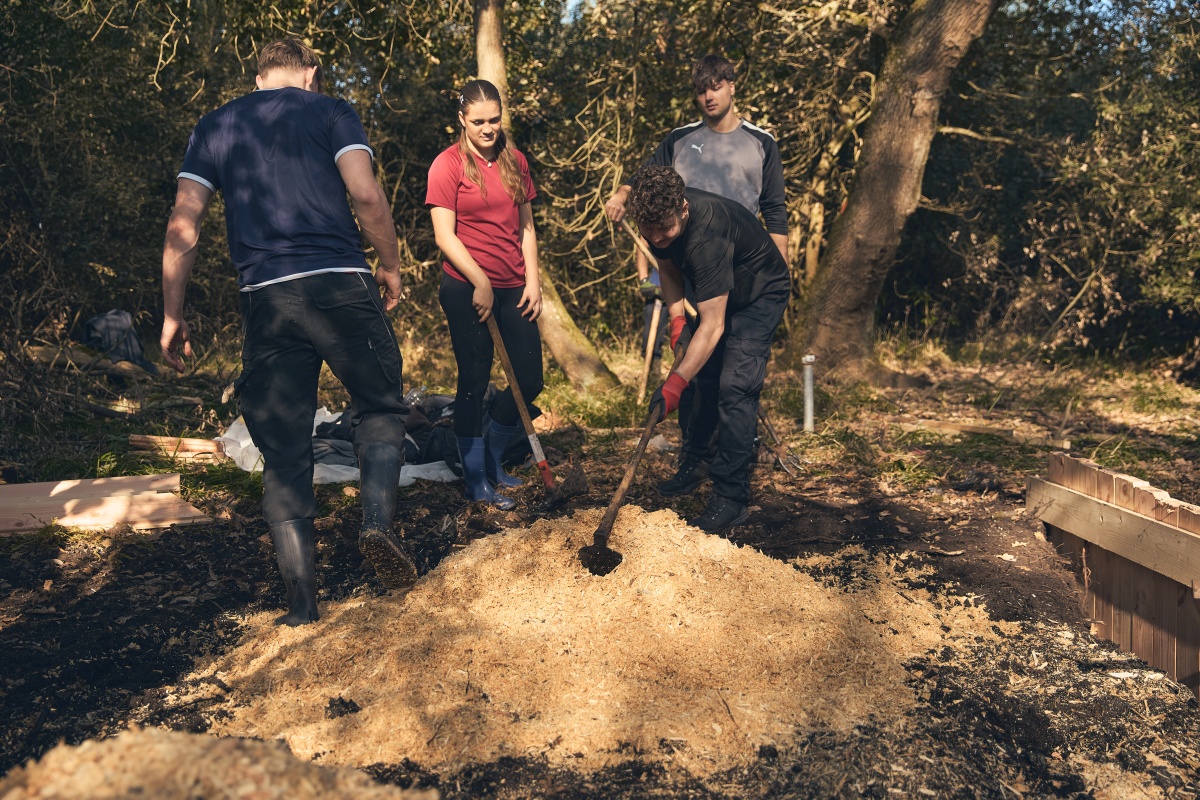
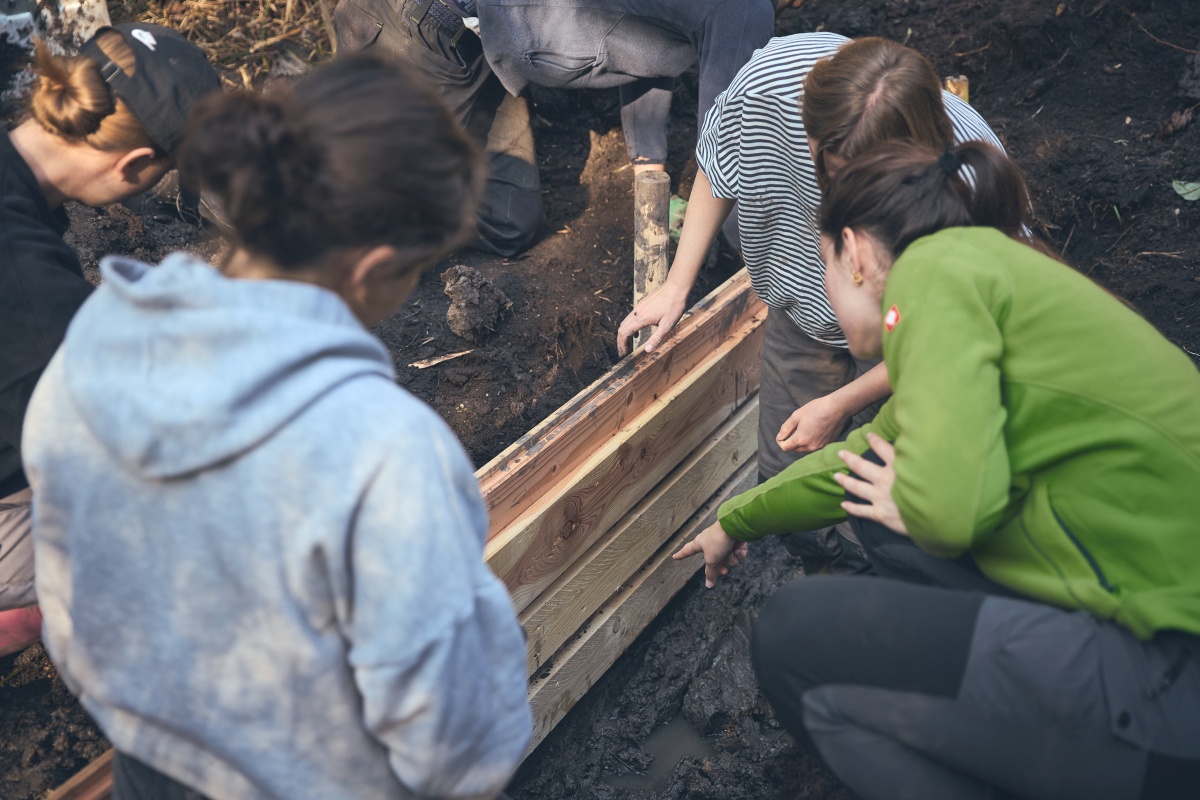
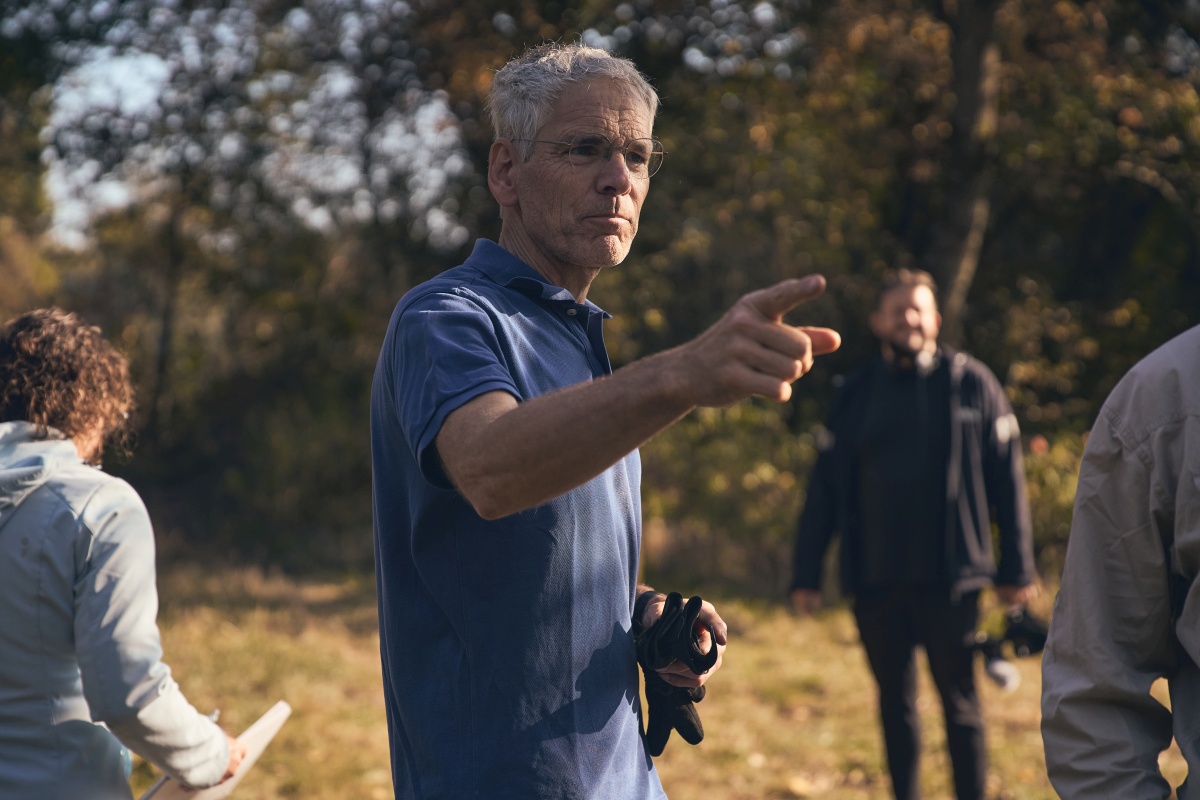
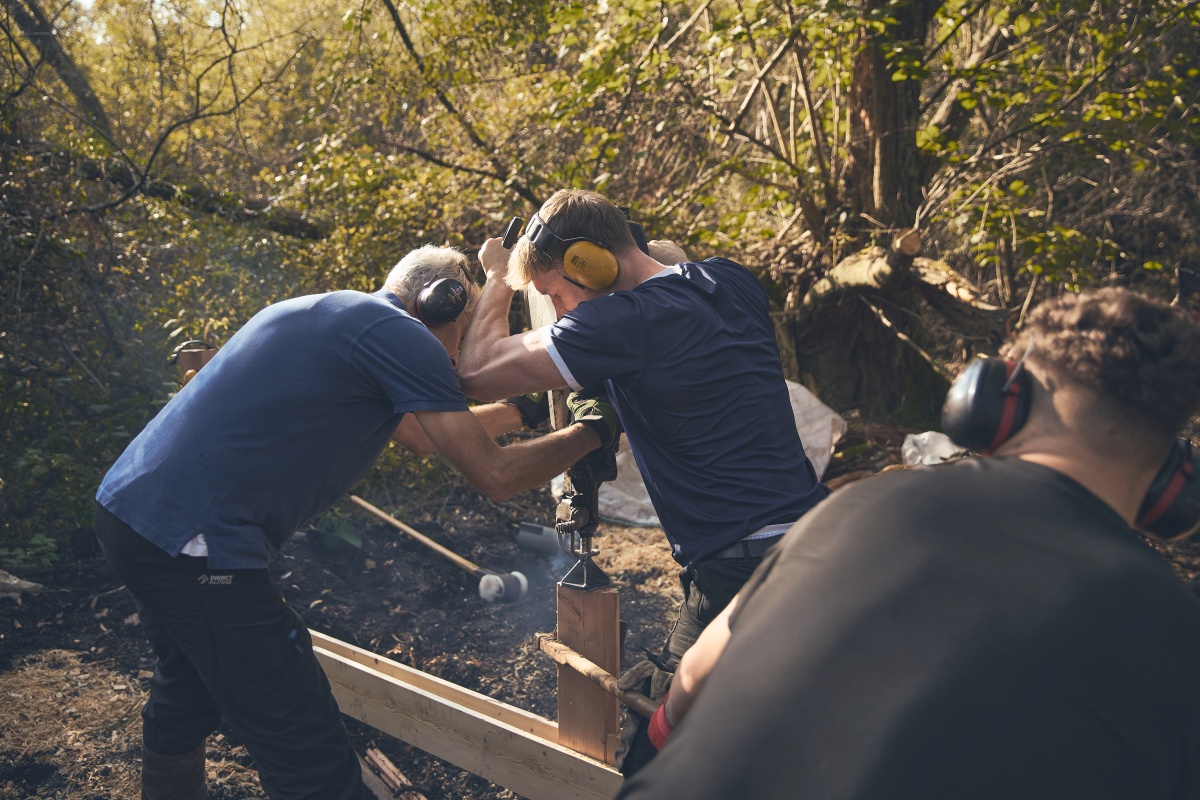
Christian Damm introduced the students to the work processes and supervised them on site. Since the sensitive and protected peatland cannot be accessed by machinery, traditional manual labor was required. Divided into four groups, the students excavated soil, removed roots, transported 22 cubic meters of sawdust by wheelbarrow, and incorporated it into the highly decomposed peat soil. At four prepared locations, they then installed cut-to-size wooden planks as sheet pile walls or plank walls.
For master’s student Madeleine Düppuis, who studies geoecology, the practical course was a welcome opportunity to gain hands-on experience: “I think it is great to roll up your sleeves and implement something when you know it will have a positive long-term impact on the environment.” For bachelor’s student Julian Kern, who studies geography, the main motivation was the chance to explore a natural environment beyond the lecture hall: “Even though it was physically demanding, you feel that something is better afterward and that the peatland can become wet again.”
“The lack of water is not only a consequence of climate change. Primarily, it is because we continuously channel it away,” explains Christian Damm. In many places, the political will to change this already exists: “Convincing people is becoming easier all the time. But in practice, too little is happening.” He therefore hopes for more courageous decision-makers in public administrations and faster permitting procedures. He sees the project as a signal that meaningful action is possible.
Students such as Madeleine share this desire to take action: “I simply think it makes sense to be willing to try something and get started. Here, a new approach is being tested, and its effects are being monitored afterward.”
At Rastatter Bruch, the Institute of Geography und Geoecology, located just one kilometer away, is carefully observing what happens after the ditches have been sealed. Groundwater monitoring wells show how water levels develop, while another instrument records temperature and soil moisture. “It is a wonderful living laboratory for scientific research,” says Christian Damm.
Simone Heinrich, October 22, 2026