Robot Dogs and Chatbots: KIT Students Shape the Digital Future
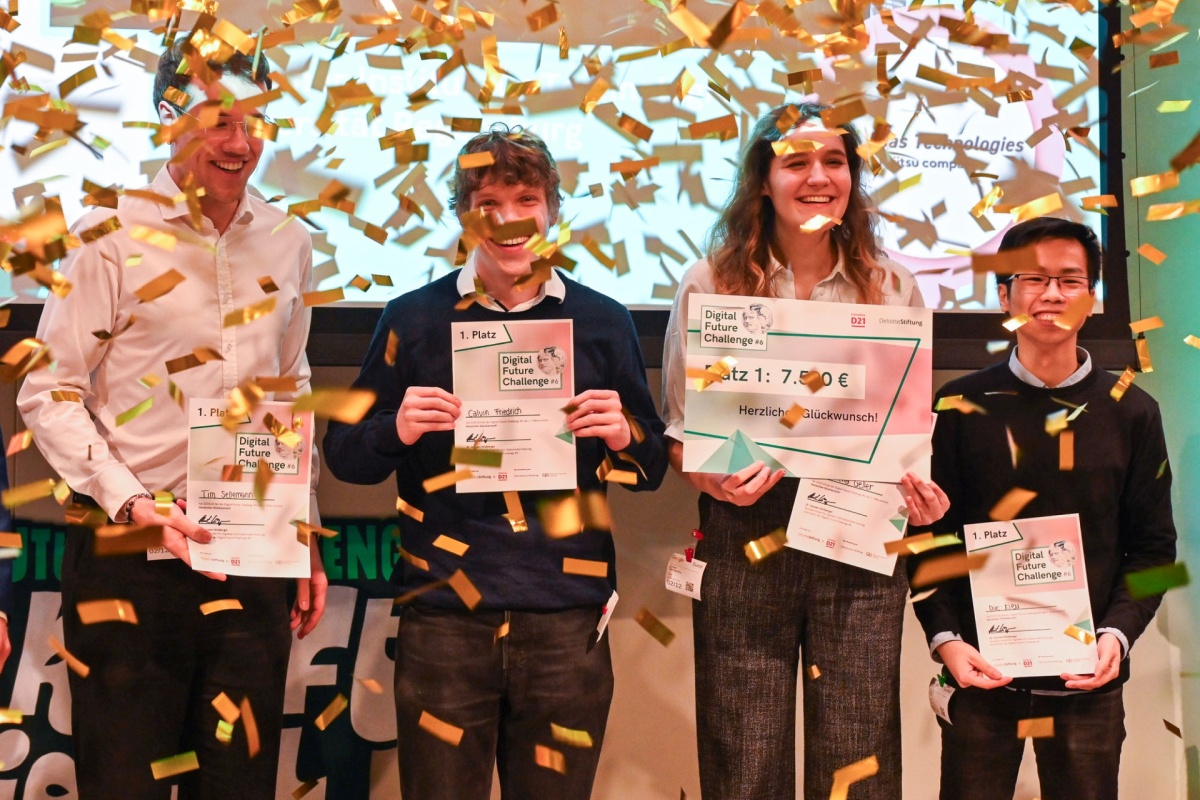
Every year, students compete in the Digital Future Challenge (DFC) to develop the best solutions for a digital future. This year, two KIT teams prevailed over 87 other ideas: the AI agent system “Ankommen” helps people navigate the bureaucratic landscape, and the robot dog “Sprout” helps reduce the use of chemicals in agriculture.
Calvin Friedrich, Samantha Geller, Duc Kieu, and Tim Sellemann impressed the jury with their AI agent system Ankommen: the winning team developed a chatbot that supports people in applying for residence permits. With multilingual chat and voice input, the system facilitates scheduling appointments, entering data, and communicating with authorities. “The process of obtaining a residence permit is extremely complex for many people. I know this from my own experience, as my mother had difficulties with applications, documents, and unclear requirements for years. These experiences motivated me to develop a solution that supports people in exactly these situations,” says Duc.
Teamwork played a major role in the development process. “Everyone was able to contribute their individual strengths, whether in the technical field, in design, or in conceptualization,” Duc emphasizes. For the team, the victory is above all a confirmation of their efforts to design AI for people. “For our Ankommen project, the victory is a great motivation to continue and develop the concept further. At the same time, it shows us that our idea is relevant and has real potential to support people in difficult situations,” he adds.
Technology Meets Agriculture
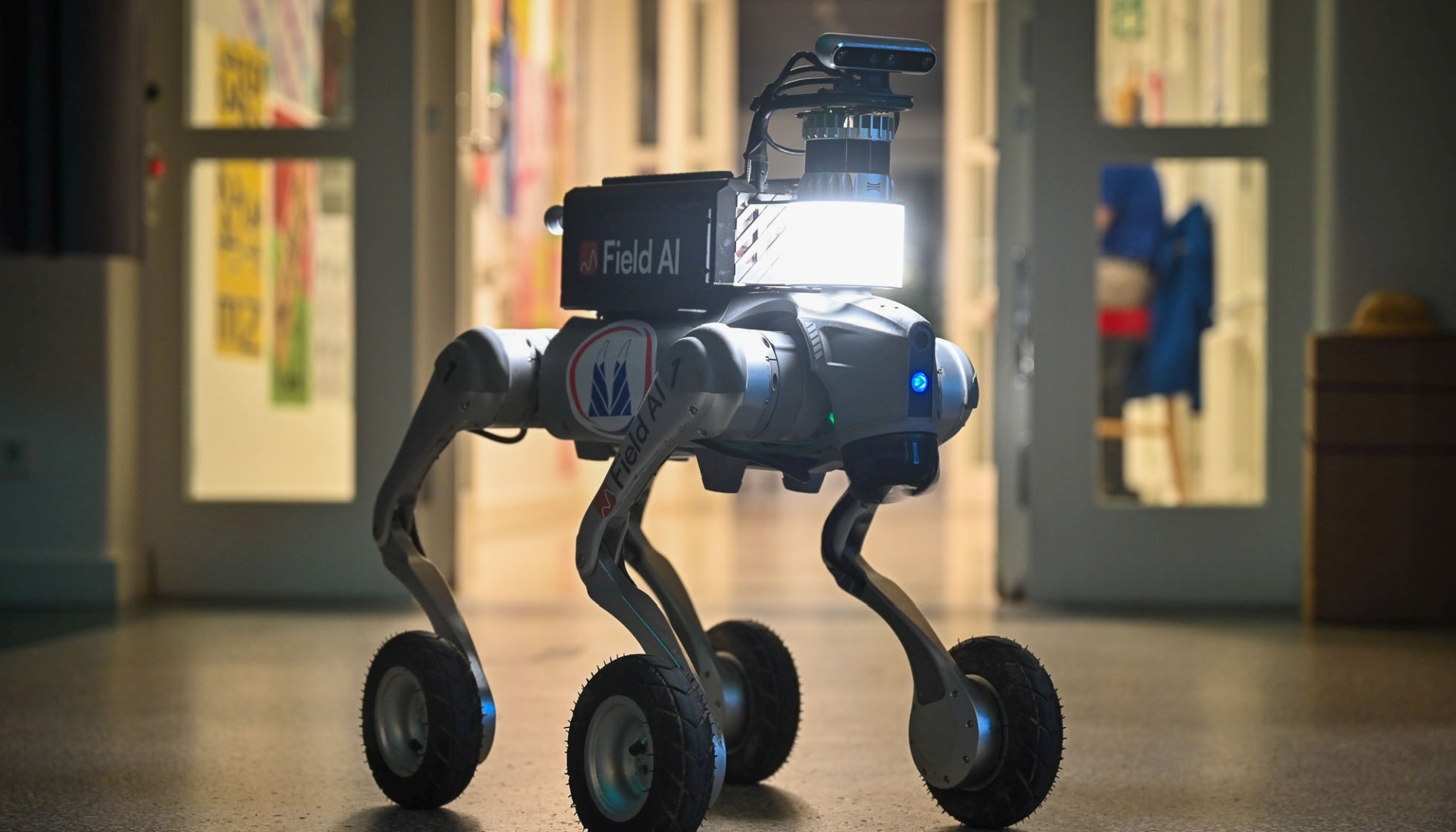
The team behind the robot dog Sprout is pursuing a completely different but equally future‑oriented approach, which the DFC jury honored with second place: Silas Gramlich, Lisa Hessenthaler, and David Schnetzer aim to support more sustainable agriculture with their concept. Sprout takes soil samples and analyzes the required amounts of fertilizer and pesticides. This significantly reduces the use of chemicals.
“The initial idea for a soil‑sampling module on a walking robot originated in the CAD Engineering Project for Intelligent Systems course at KIT,” says Lisa. The team then advanced its prototype throughout the competition, but the robot dog is far from finished, she adds: “At KIT, our prototype will be further developed and made more robust in this year’s course. This allows the module to be refined from group to group, and the contacts we made at the DFC help us gather feedback on areas for improvement.”
Sounds interesting? Participating is easy!
Students can apply online for the Digital Future Challenge in teams of two to four. The opportunity to connect with students from other universities via the website also gives individual students a chance to participate. “The DFC allowed us to further develop projects created at the university and potentially address real‑world problems in the future. That is why we can only recommend: just take part!” the Sprout team emphasizes.
Lea Laraia, February 26, 2026