How did you like the article? Feel free to use our new rating feature on the right edge of the screen and let us know what you think! This will help us improve our content.
Participation is voluntary and anonymous.

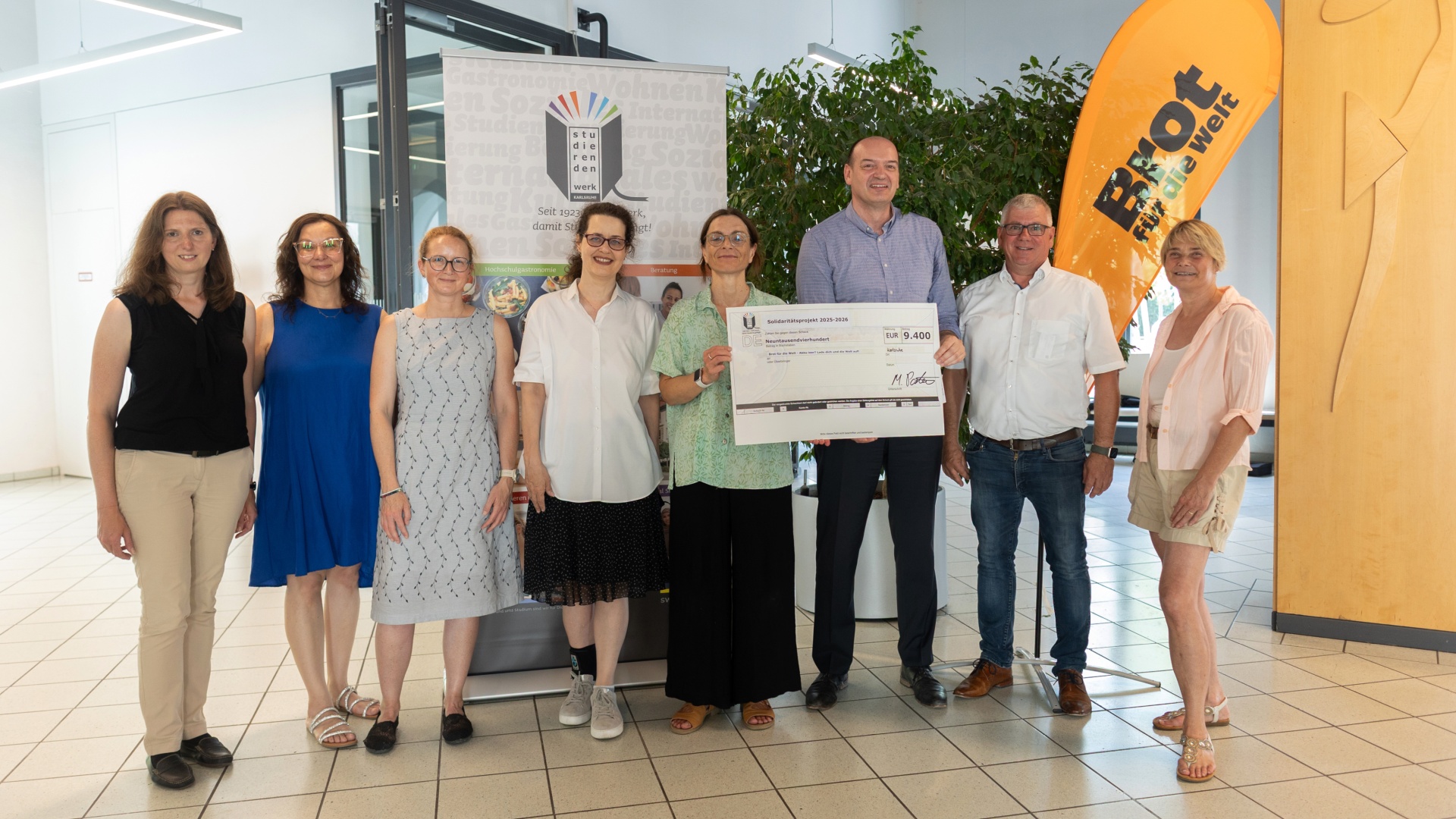
For more than 20 years, the “Soli-Essen” in the student dining halls operated by the Studierendenwerk Karlsruhe has been combining everyday campus life with global responsibility. With small contributions, you can support international aid projects while having lunch. Most recently, 9,400 euros was raised for a project related to lithium mining in Bolivia. And the next solidarity campaign has already begun!
Lunch break, a quick trip to the cafeteria. For many, this is part of everyday student life. On Thursdays, your lunch can make a big difference: when you buy a “Soli-Essen,” you support an international aid project with 25 cents. You can also help by purchasing a “Soli-Muffin” in the cafeterias. Ten cents from each muffin go into the solidarity fund.
Behind this initiative is the Studierendenwerk Karlsruhe (Karlsruhe Student Services), the Evangelical Student Community of Karlsruhe (ESG), and the Catholic University Community of Karlsruhe. For more than 20 years, they have been working together with you and other guests in the student dining halls and cafeterias to support people around the world. The principle is simple: many small contributions add up to meaningful support.
How did you like the article? Feel free to use our new rating feature on the right edge of the screen and let us know what you think! This will help us improve our content.
Participation is voluntary and anonymous.
The projects address global challenges, from nutrition and education to climate protection and social justice. “Even small contributions can make a big difference. Anyone who chooses a Soli offering provides concrete support to people and, at the same time, sends a message of global responsibility and justice,” says Michael Postert, Executive Director of Karlsruhe Student Services.
The previous project, “Battery Dead? Recharge Yourself and the World,” focused on lithium. This raw material is needed for batteries in smartphones, electric vehicles, and energy storage systems. Together with Bread for the World, the initiative supported a project in Bolivia.
Around the Uyuni Salt Flat, the project educates people about the opportunities and risks of lithium mining and empowers them to assert their rights. While the raw material can create economic opportunities, it can also threaten the environment and local livelihoods.
Thanks to the proceeds generated by the Soli offerings, a total of 9,400 euros was raised for the project. “The money supports initiatives that inform local people and strengthen their rights even before lithium mining begins and leaves lasting environmental damage,” explains Ulrike Schieren of ESG Karlsruhe.
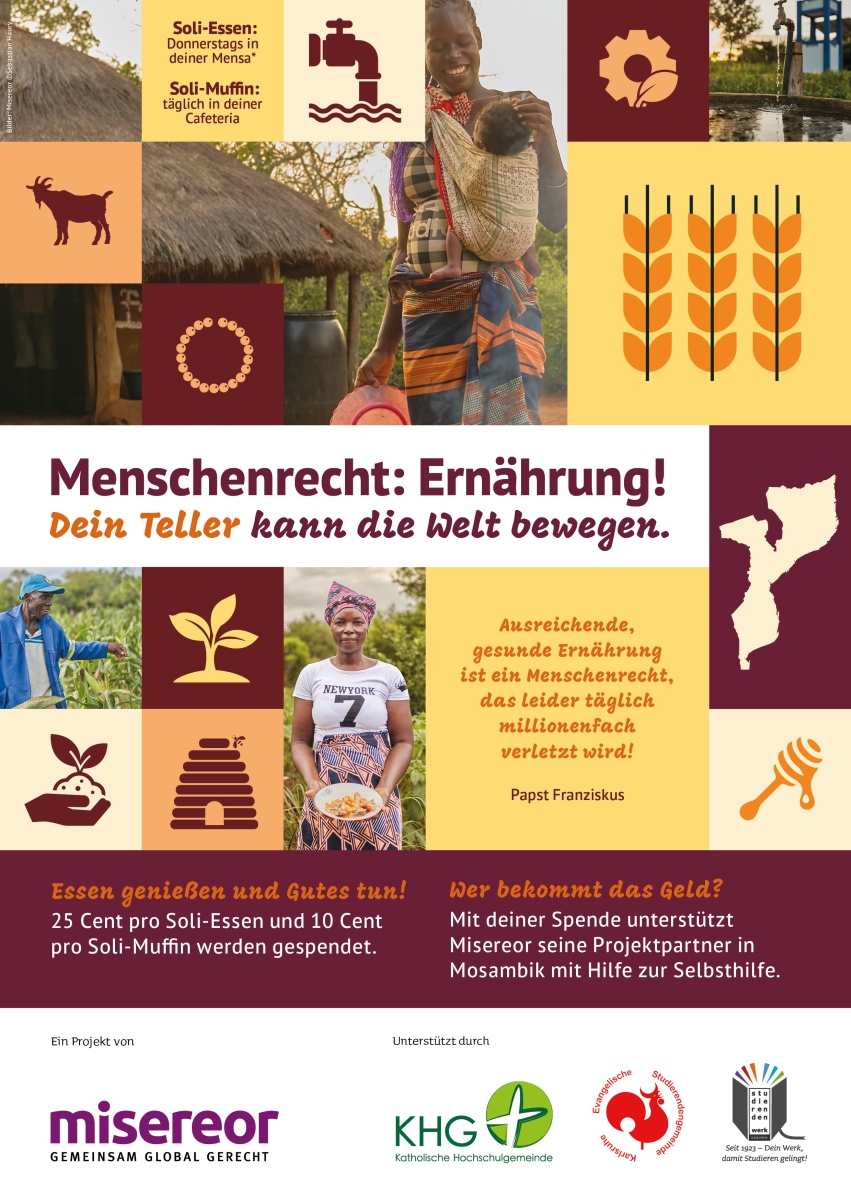
The next project has already begun. Under the motto “Human Right: Food! Your Plate Can Change the World,” donations from the soon-to-end summer semester and the upcoming winter semester will go to project partners of Misereor in Mozambique.
There, many people suffer from hunger, inequality, drought, conflict, and other crises. The project focuses on helping people help themselves: community committees are strengthened, access to water is improved, and families receive training and small loans to help increase their yields and incomes, for example through beekeeping or livestock farming.
Twenty-five cents for a meal or ten cents for a muffin may not sound like much. But when many people participate, it adds up to tangible assistance. In this way, you can integrate global responsibility into your everyday student life while helping people build their futures independently and with self-determination.
Sabine Fodi, September 17, 2026