In Search of the Right Algorithm
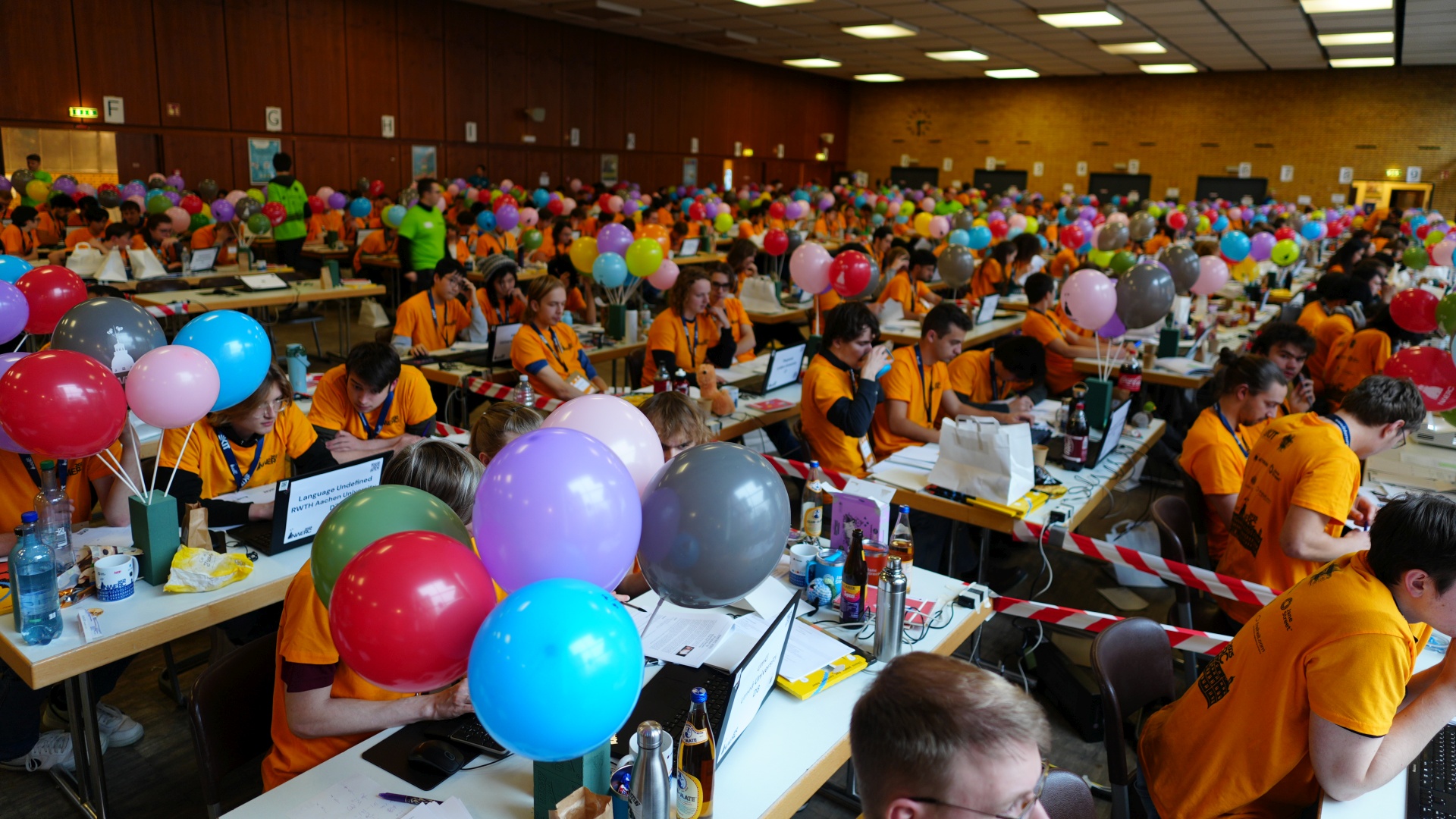
At the end of last year, the KIT dining hall was transformed into a competition arena: Over 400 students from 70 universities in 13 countries in northwestern Europe travelled there with their more than 150 coaches to take part in Europe’s largest in-person programming competition – the Northwestern Europe Regional Contest (NWERC).
In 2025, KIT hosted the competition, in which teams of three students competed to solve a total of twelve tasks in five hours. The best teams were awarded with nothing less than participation in the world finals of the International Collegiate Programming Contest (ICPC) – either directly as one of the two highest-ranked teams or via the ICPC European Championship, for which the eight best teams qualified.
Coordination Under High Pressure
Each team had only one computer at its disposal, which meant coordination and consultation within the team as to who would implement which solution and when – with time constantly pressing. The teams then submitted their proposed solutions in an automated evaluation system.
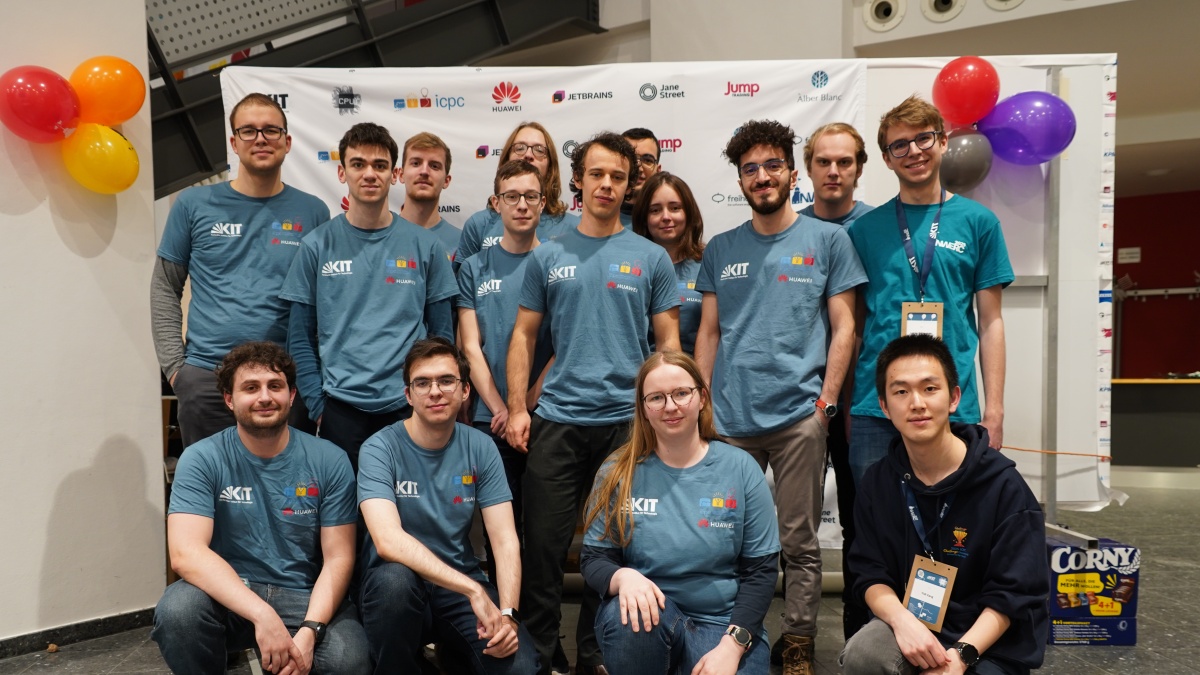
KIT has a long tradition of participating in this competition – teams have been taking part for over 20 years and have qualified for the ICPC World Finals four times. At NWERC 2025, the four KIT teams were coached by Michael Zündorf, a doctoral student at the Institute of Theoretical Informatics (ITI) at KIT.
“I took part in the competitions myself as a student and really enjoyed it. I also got to know lots of people, first as a contestant and later as a member of the jury,” he says. “It's great to see how much the competitive programming community in Karlsruhe has grown over the last few years, and as a coach I can support the students here.”
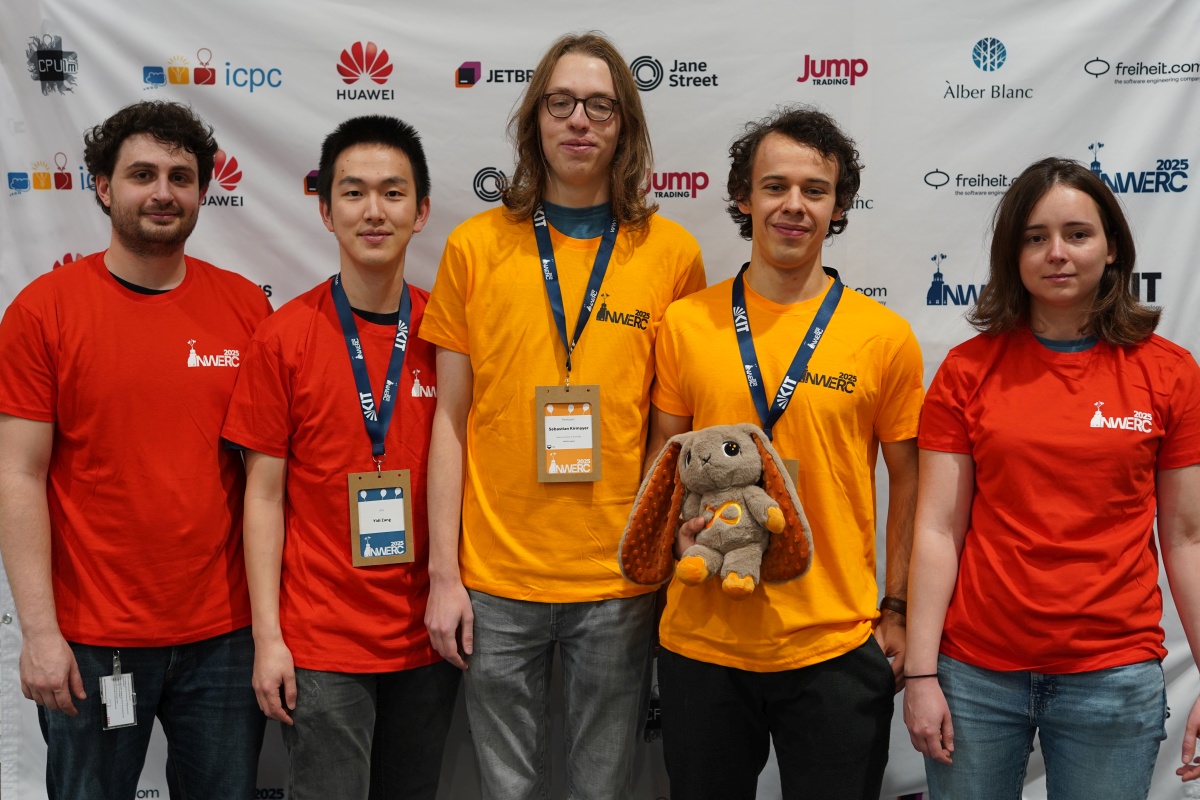
The “Infinite L∞pers” qualify for the European Championship
The highest-ranked KIT team “Infinite L∞pers” solved ten of twelve problems and thus achieved seventh place. The prize: the silver medal and participation in this year's European Championship. “A very good performance. The best team in the competition solved 11 problems,” says coach Zündorf. The other KIT teams also achieved respectable results, placing 23rd (‘KITset’, 9 tasks solved), 35th (‘[Kœr]ectness In Theory’, 8 tasks solved) and 49th (‘TIꞰKIT’, 8 tasks solved) out of a total of almost 140 teams.
The competition was organised by the ITI's Scalable Algorithms research group in collaboration with the Association for the Promotion of Competitive Programming (Verein zur Förderung des Kompetitiven Programmierens e.V.) and with the support of the Mathematics/Computer Science Student Council. For Bachelor's students, the Scalable Algorithms research group led by Tenure Track Professor Thomas Bläsius also offers an internship every summer semester to prepare for the competition and select future participants.
Sabine Fodi, February 5, 2026