A Doctorate Knows No Age
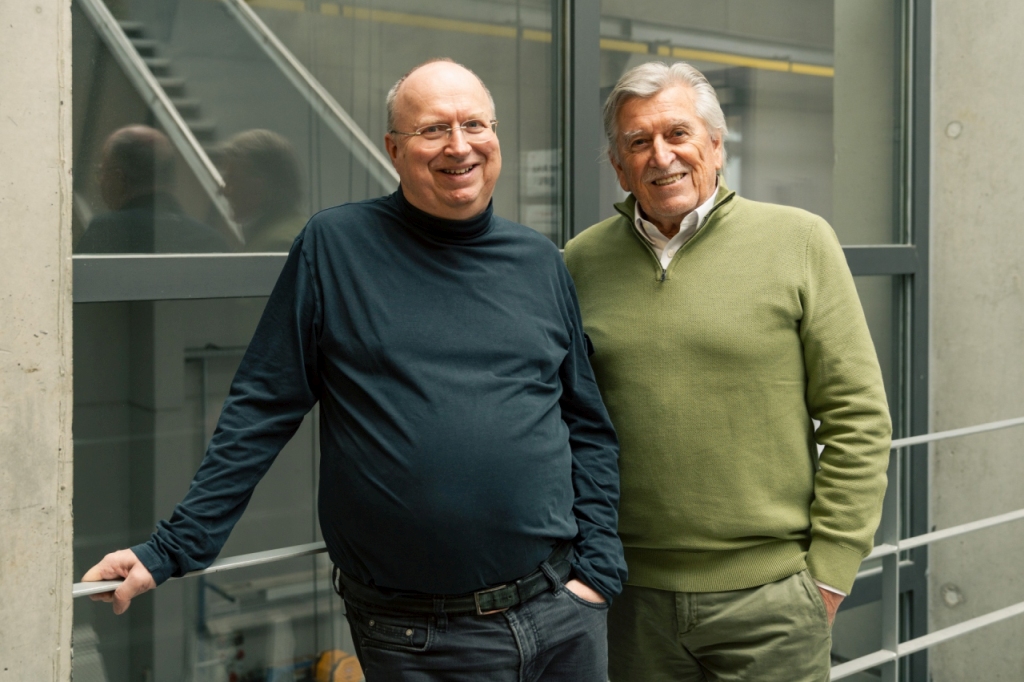
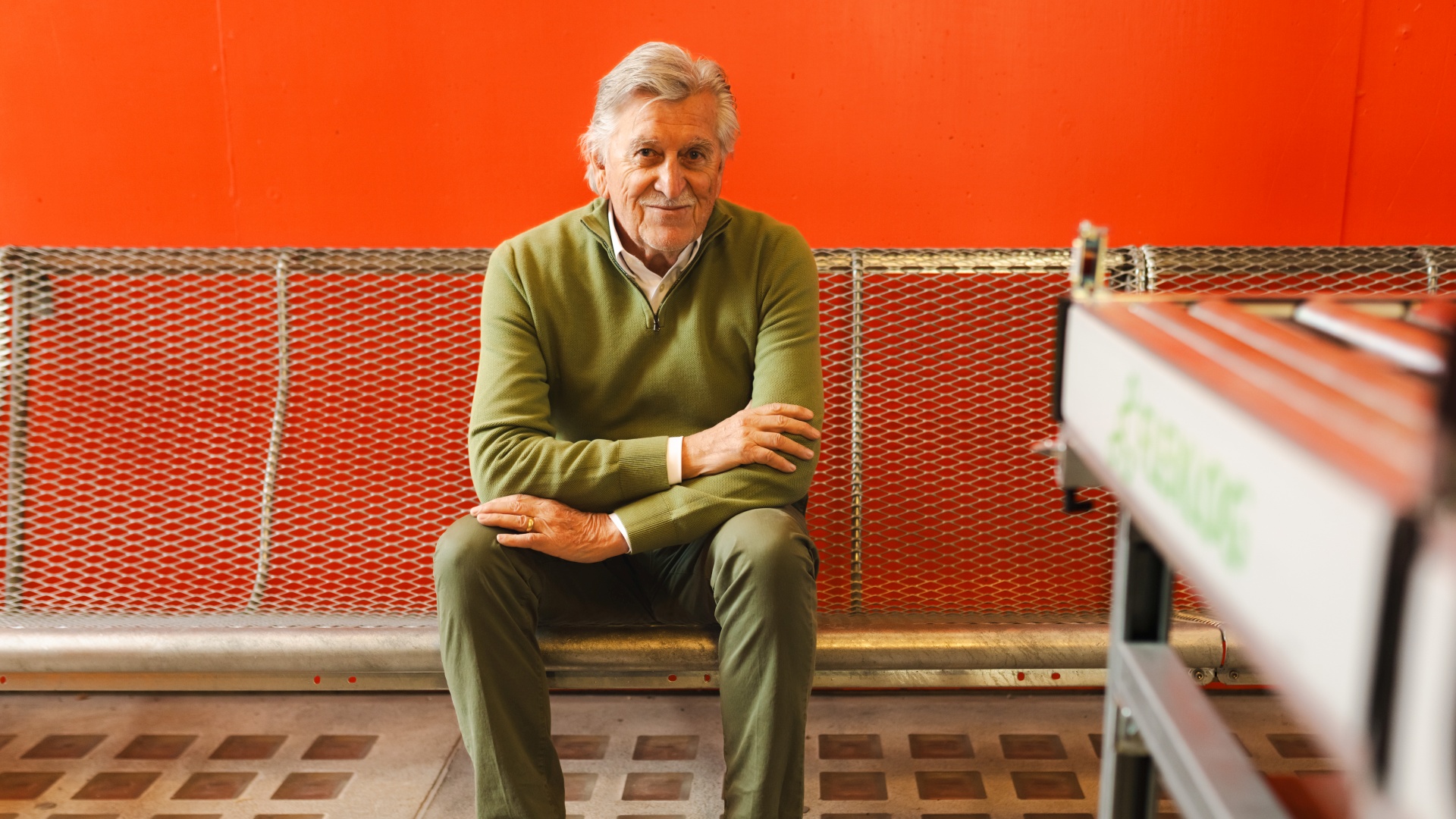
Would you still do a doctorate at 73? Hermann Merkel did, and five years later he can officially call himself “Doctor.” The former freight forwarder conducted research on e-highways at the KIT Institute for Material Handling and Logistics, often doubting himself in the process. In clicKIT, he explains what kept him going and why this period had such a profound impact on him.
“We can experiment with anything – just not with quality,” said Professor Kai Furmans to his oldest doctoral student when he approached him with a topic proposal five years ago. Hermann Merkel ran his own freight forwarding company for four decades. He made decisions quickly, often based on experience. After selling his company, however, one topic remained on his mind: the use of e-highways in road traffic. A route that his trucks used to travel every day became a test track with overhead lines. Hermann was skeptical at first: “At some point, I thought that this should be investigated more closely, and since then, the idea of doing a doctorate has been floating around in my head.”
Every Beginning Is Difficult
It was by no means a sure thing that he would return to university for this. There were around 50 years between his engineering degree and his doctorate. “I constantly doubted whether I could do it,” Hermann says in retrospect. As an external doctoral student, he initially worked alone and first learned programs such as LaTeX and Matlab. “I often sat over tutorials. Sometimes it worked, and sometimes it only worked after a lot of trial and error.”
At the same time, he was driven by ambition. When he starts something, he wants to see it through to the end. His doctoral supervisor challenged and encouraged him with clear words: “You are no longer a freight forwarder. You are now a scientist.” For Hermann, this meant thinking differently. No longer making decisions based on gut feeling, but proving theories and testing assumptions.
In The Fast Lane With Electric Drive
The e-highways that Hermann dealt with in his doctoral thesis are motorway sections equipped with overhead lines. Trucks draw electricity from these to power their electric motors. Compared to diesel engines, this can reduce CO₂ emissions by up to 40 percent. Hermann examined the eWay system from a business perspective and asked: Who benefits from it? Which routes would need to be electrified to make the investment in expensive overhead line trucks worthwhile?
His conclusion: under certain conditions, e-highways can make sense. However, the development of powerful electric trucks has changed the picture significantly in recent years. While he was calculating and modeling, batteries improved rapidly. Today, many are opting for pure electric trucks instead of overhead line systems.
A Late Chapter – And a Very Special One
Despite the exciting topic, it was the time at the institute that was particularly special for Hermann. After the coronavirus phase, he became increasingly integrated into the team, traveled to Switzerland for the winter seminar, and exchanged ideas more and more with younger researchers. “At first, I was probably more nervous here than I used to be at my company, but my colleagues welcomed me with open arms,” he says. “They gave me support where I really needed it.” In return, his extensive practical experience was also appreciated.
Persevering Until The Goal Is Reached
Earning a doctorate at the age of 78 is not something that is done lightly. It requires good health, perseverance, and the courage to embark on something unknown. Hermann had his doubts, often even. But he stuck with it and says today: “I can only encourage everyone to continue learning. It's just wonderful when you learn something new that you can think about and talk about.” In the end, that is also his most important insight: lifelong learning is worth it.
Elisa Rachel, March 5, 2026