“Innovation Ecosystems like KIT Are Essential for Technological Sovereignty in Germany“
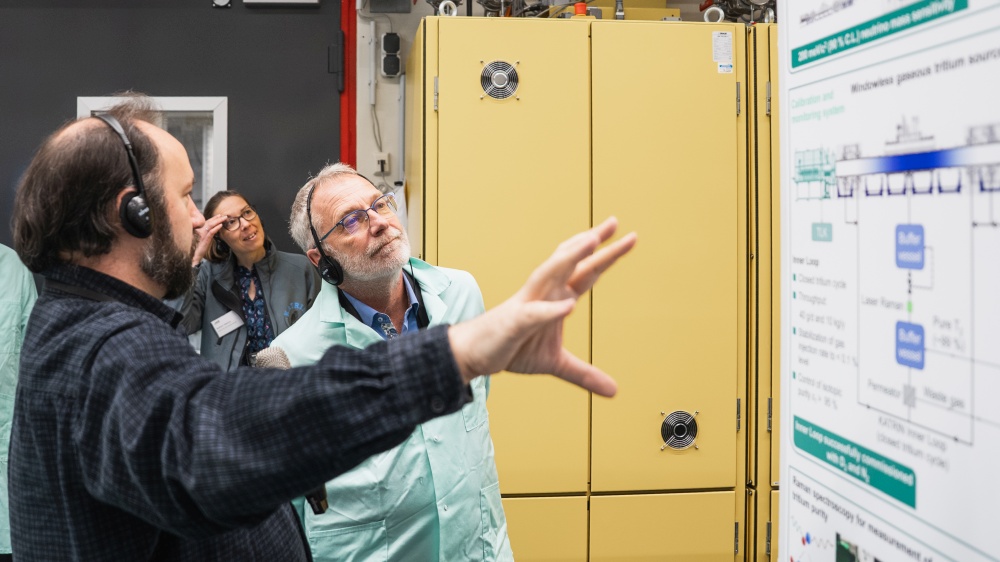
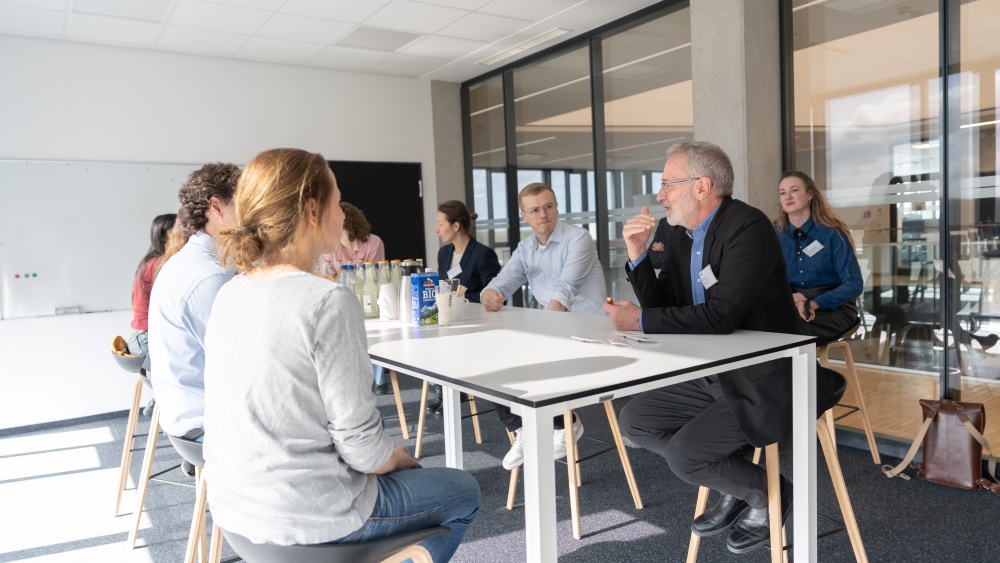
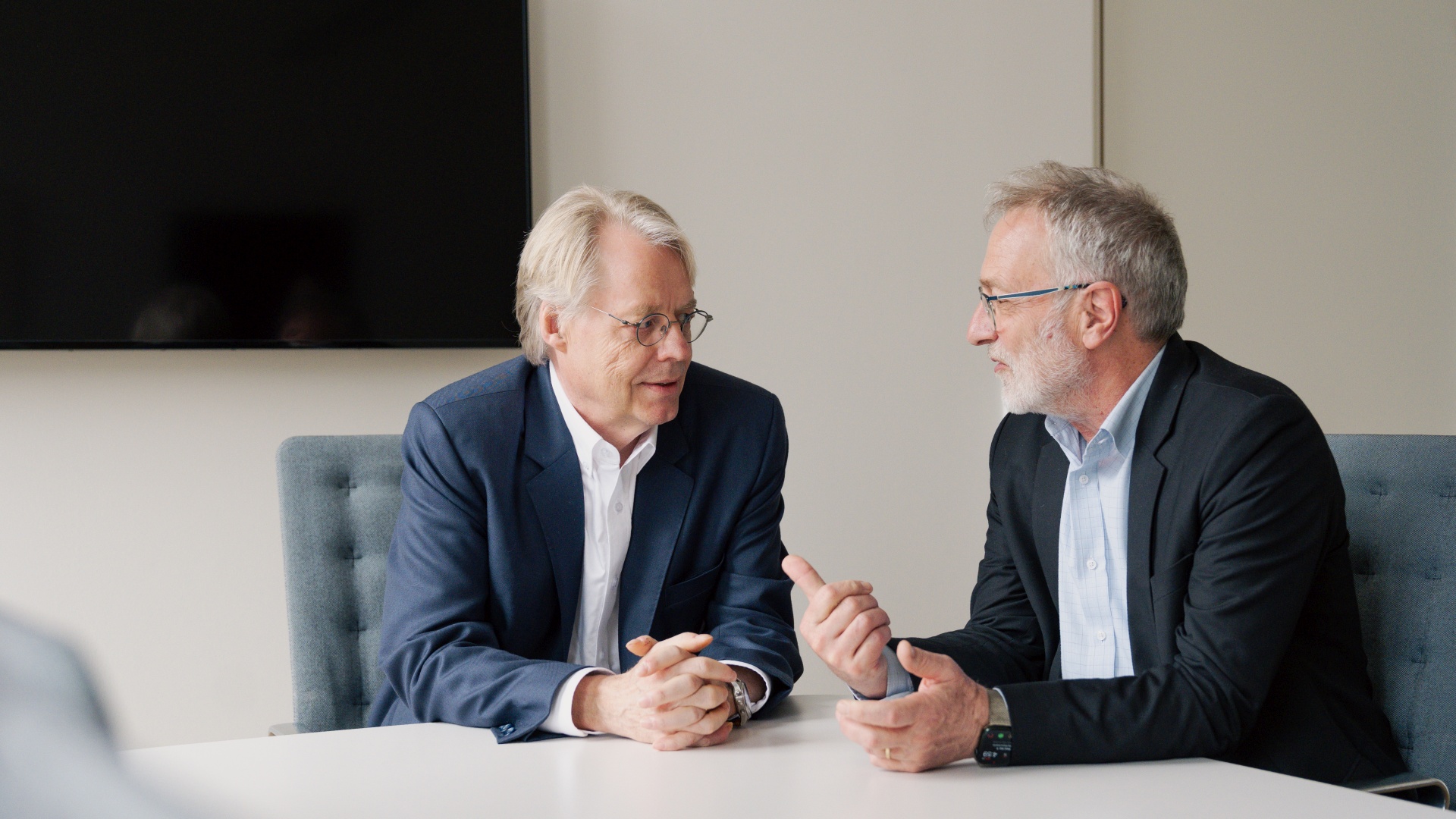
Helmholtz President Martin Keller visited KIT in March and had the opportunity to learn about ongoing research, speak with KIT’s early-career researchers and visit some of our unique infrastructure. In a common interview, he and KIT President Jan S. Hesthaven discussed upcoming priorities and KIT’s special role within the Helmholtz Association.
clicKIT: Helmholtz brings together 18 research centers. What unites them, what makes Helmholtz what it is?
Martin Keller: The Helmholtz Association can be compared to a soccer team in which every player has unique qualities and individual talents. What unites us is our team spirit, our shared mission, and our systemic perspective: We aim to find answers to the major and pressing questions facing science, society, and the economy. Thanks to our size and the diverse research focuses of our individual centers, we are able to cover the entire chain – from basic research to application. In addition, our large-scale research facilities form the basis for a unique data infrastructure that allows insights from a wide variety of fields to be linked.
Both of you emphasize that research institutions have a social responsibility; currently, the Hightech Agenda Germany and the growing importance of security and defense related research are major issues. How will Helmholtz deal with these issues and what role do you see KIT playing in this context?
Keller: There is a massive overlap between our research areas and the topics on the Hightech Agenda. That basically says it all. We are currently discussing within the Association what specific priorities Helmholtz will set in the area of security-related research. One thing is certain, however: Innovation ecosystems like KIT are essential for creating a sustainable foundation for technological sovereignty and security resilience in Germany.
What strengths will KIT bring to the table? And how important is large-scale research for KIT?
Jan S. Hesthaven: We are proud to be part of the Helmholtz Association as the combination between the Helmholtz research center and a strong university opens up for some unique possibilities. KIT excels in the fields of AI, quantum technologies, fusion, chip design, sensor technologies etc., and translates cutting-edge research into practical solutions. These are precisely the key technologies highlighted in the Hightech Agenda. Large-scale research – with its possibilities, resources, and people – is absolutely crucial in developing solutions for a sustainable and resilient society. KIT’s unique strength lies precisely in uniting mission-driven and curiosity-driven research. Security-related research is a central theme for us. Naturally, it must be pursued responsibly, in accordance with our ethical guidelines and respecting the nature of the open and inclusive community that a university is. There is no question in my mind that we must engage with technologies that serve to protect the security and resilience of Germany and Europe. This is an essential part of our contract with society. We are a partner in the State of Baden-Württemberg’s Innovation Campus for Security and Defense and we are currently positioning ourselves in this domain to ensure clarity of our stance, both internally and externally.
Some of the other Helmholtz centers have a clear thematic focus. KIT is strong in energy research, but overall has a broader scope. Is this a disadvantage – or a strength?
Hesthaven: KIT is deeply rooted in four Helmholtz Research Fields to which it contributes in substantial and diverse ways. To address today’s challenges, we must think across disciplines – both at KIT and in collaboration with the other Helmholtz centers. KIT is particularly well-positioned at these interfaces, e.g., between energy research and information technologies, to name just one example. It is precisely this ability to collaborate across disciplines and institutions that makes us strong. We can and should not present we can do “everything.” Rather, we must focus on building on our strengths and expanding our collaborations with the right partners.
Keller: KIT has a unique position within the German research landscape. As a university within the Helmholtz Association, it combines research and teaching with large-scale research infrastructures – a combination I felt immediately during my visit. I was very impressed by the breadth of topics as well as the integrative approach used here to bring together different disciplines. Strategic, cross-institutional, and interdisciplinary research is key to making significant progress in innovation across key future-oriented fields.
KIT is the only “University in the Helmholtz Association“, and educating talent is a priority. How does this align with the Helmholtz mission, and how does Helmholtz benefit?
Keller: The future happens now – among other things, by training and supporting the top talent of tomorrow. Ultimately, this benefits not only the Helmholtz Association but the global scientific community as well. That is why it is so important to me to set aside sufficient time and space during my tour of the Helmholtz Association to engage with doctoral students, postdocs, and junior research group leaders. I want to better understand what is currently on their minds and what matters to them.
Five years from now, what would be a clear sign that Helmholtz and KIT are on the right track?
Hesthaven: KIT and the Helmholtz Association alike, are at the beginning of a strategic process that is not only about focusing our research on major challenges and societal benefits – but also about building a more agile organization and opening up even further: to new collaborations and new talent from around the world. Clear criteria for success is that we can make decisions significantly faster, we can implement ideas more quickly, we join forces with strategic partners, and attract more students, researchers, and employees from all over the world to KIT. This must, however, be achieved while ensuring that KIT is a place where talent wants to develop and pursue their career.
Keller: A key priority for me is to further strengthen collaboration between the various research areas – in part to contribute to “AI made in Germany.” At the same time, I would like to streamline program-oriented funding (POF) and systematically expand cooperation with industry through public-private partnerships (PPP). Helmholtz has the potential to become a catalyst for the entire German innovation landscape. Furthermore, we need to make the Helmholtz brand more visible in society. We must communicate more clearly and comprehensibly what we are researching and why. We owe this not least to the taxpayers who make our work possible.
Margarete Lehné, April 23, 2026