How did you like the article? Feel free to use our new rating feature on the right edge of the screen and let us know what you think! This will help us improve our content.
Participation is voluntary and anonymous.

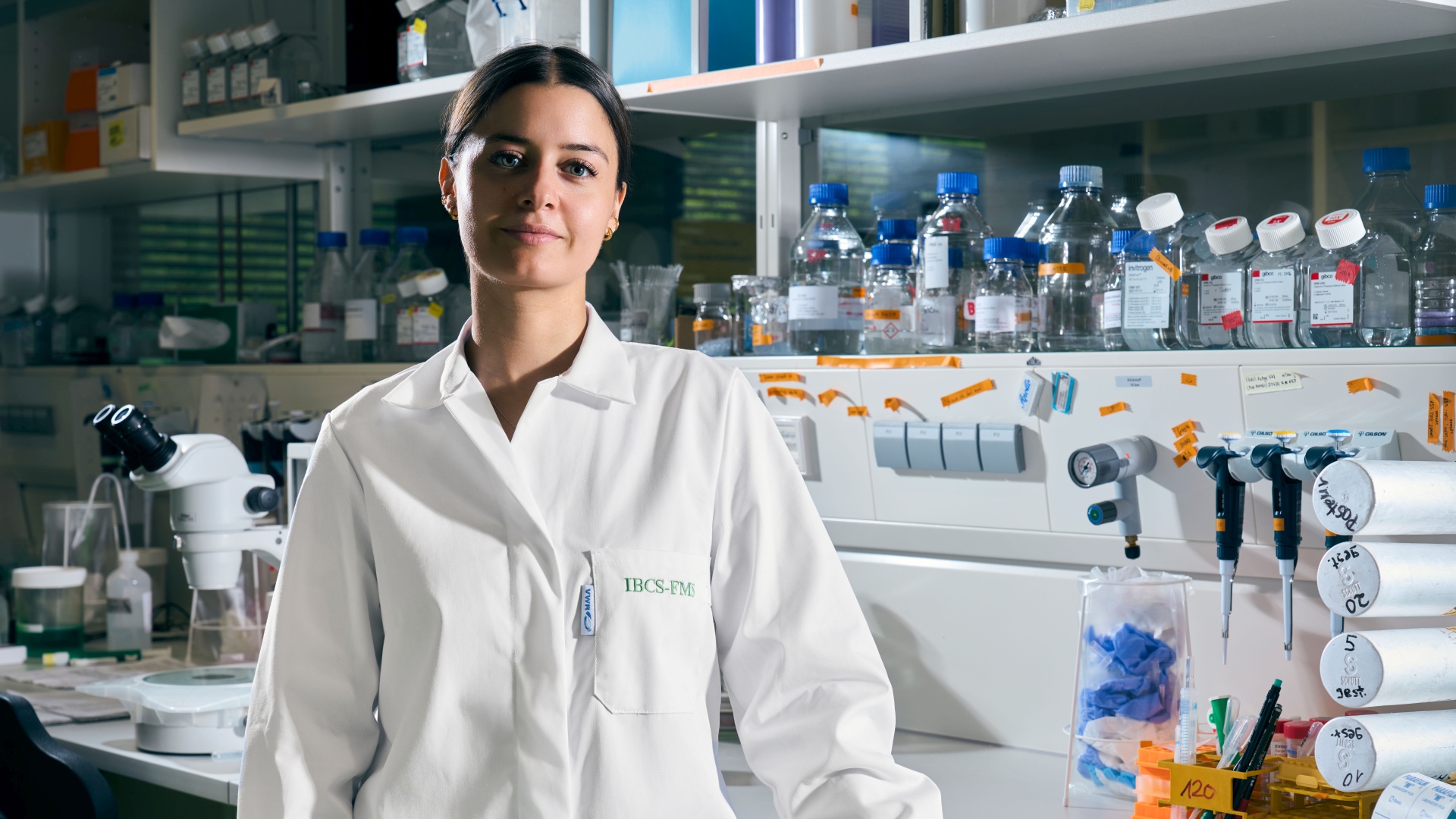
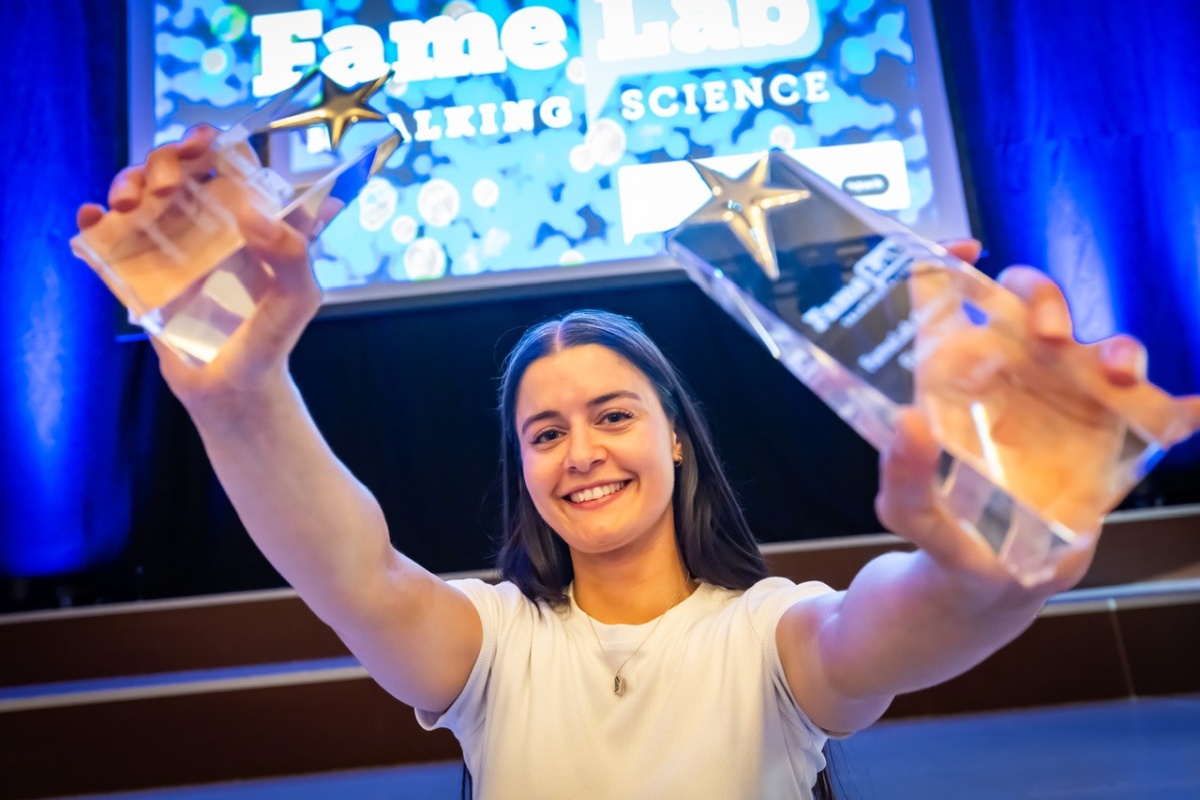
A red bowl of Jell-O, 180 seconds, and a big question: What happens inside a cell when it divides? With a short presentation on her fundamental research, Mona Wellhäusser, a doctoral researcher at Institute for Biological and Chemical Systems at KIT, won the German national final of FameLab, an international science communication competition.
How did you like the article? Feel free to use our new rating feature on the right edge of the screen and let us know what you think! This will help us improve our content.
Participation is voluntary and anonymous.
“One particularly fascinating moment occurs when the nuclear envelope breaks down during division and then reassembles around the two newly formed nuclei, all at remarkable speed,” says Wellhäusser.
Part of the newly formed nuclear envelope consists of thousands of tiny nuclear pore complexes that regulate the transport of water, proteins, and ions between the cell nucleus and the cytoplasm. If this process becomes disrupted, the consequences can be severe, ranging from neurodegenerative diseases to cancer.
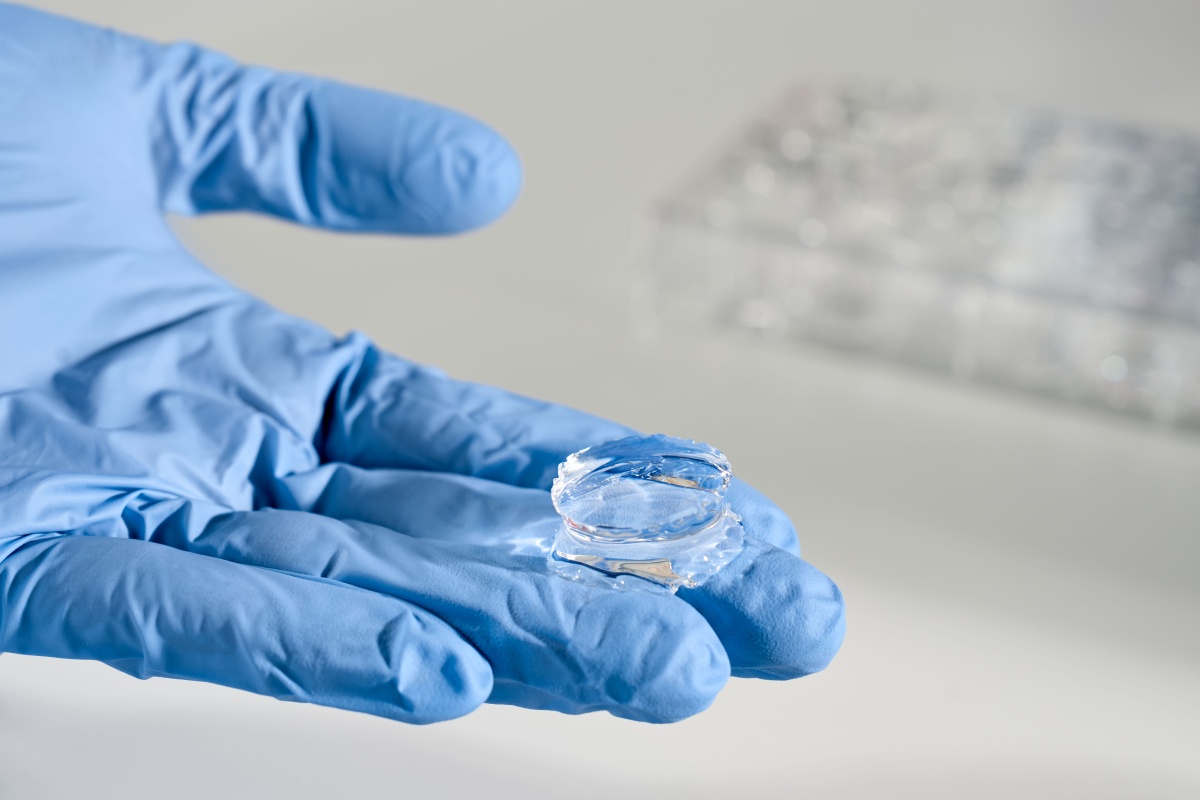
To make these tiny cellular structures visible, Wellhäusser uses expansion microscopy. In this technique, cells are embedded in a swellable gel that expands uniformly when water is added, much like Jell-O. This spatial expansion allows the researcher to visualize minute details that would otherwise remain hidden. The crucial questions lie behind the method itself: How quickly do functional nuclear pores form? Where are their building blocks temporarily stored? “We have indications that cells use previously unknown structures for this purpose,” Wellhäusser reports.
The method does have one drawback: for microscopy, the doctoral researcher must fix the cell nuclei. As a result, they are no longer alive when she examines them. She reconstructs the sequence of events from snapshots of cells at different stages of division, creating a kind of time-lapse record of cell division. The algorithm required for this process is provided by Nils Friederich from KIT’s Institute for Automation and Applied Informatics.
Why is all this effort worthwhile? “Evolution has come up with remarkably clever solutions to numerous problems,” says Wellhäusser. “My goal is to understand them.” For the young researcher, FameLab is more than just a stage: “It is about inspiring enthusiasm and fostering trust in science.” In December, she will travel to Poland for the world final, bringing along Jell-O and the big questions behind it.
Brigitte Stahl-Busse, October 1, 2026